
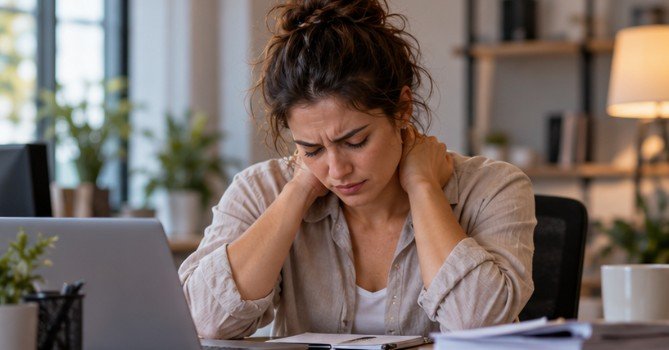
Stress does not live only in your thoughts. It can show up as a clenched jaw, rigid shoulders, restless sleep, headaches, a racing heartbeat, or the persistent feeling that your body never quite powers down.
That physical dimension helps explain the appeal of from stress to serenity the transformative power of massage therapy. Massage cannot erase a difficult job, financial pressure, caregiving responsibilities, or anxiety. What it may do is interrupt some of the physical patterns that keep stress feeling relentless.
The evidence is more nuanced than the popular claim that massage simply “flushes cortisol” from the body. Research supports relaxation, temporary pain relief, reduced muscle tension, and improvements in some stress-related symptoms, while scientists are still working out exactly why those effects occur.
Stress Changes the Body Before We Notice It
A stressful email may be psychological, but the response it produces is intensely physical. Heart rate can rise, breathing becomes shallower, muscles tighten, and attention shifts toward whatever the brain interprets as a threat.
MedlinePlus notes that stress can increase heart rate, breathing rate, blood pressure, and muscle tension. That becomes particularly important when stress is repeated every day.
Someone working at a laptop for eight hours may already hold tension through the neck and shoulders. Add deadlines, poor sleep, and constant notifications, and those muscles may spend hours partly contracted.
Massage introduces pressure, movement, stretching, and focused touch to those soft tissues. Depending on the technique, that can reduce the sensation of tightness and make movement feel easier.
What Actually Happens During a Massage?
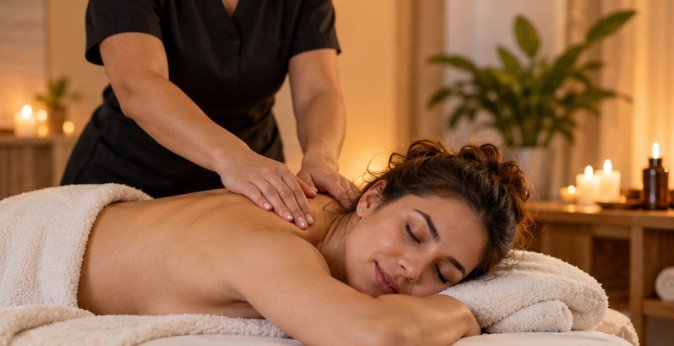
Massage therapy involves manipulating muscles and other soft tissues using techniques ranging from gentle gliding strokes to deeper, targeted pressure.
Johns Hopkins Medicine describes massage as an approach that may relieve muscular tension while creating a sense of calm and reducing stress.
The nervous system appears to be part of the story. Stress activates the sympathetic “fight or flight” response. Relaxing touch, slower breathing, physical comfort, and a quiet environment can encourage the body toward a calmer state.
However, claims about hormones deserve some caution.
You will often hear that massage automatically lowers cortisol while sharply increasing serotonin, dopamine, and endorphins. Some studies report hormonal changes, but findings are not consistent enough to treat that explanation as settled science. The U.S. Department of Veterans Affairs notes that an earlier meta-analysis did not find an immediate cortisol reduction after a single session.
The relaxation people experience can still be genuine without requiring a dramatic hormonal explanation.
From Mental Pressure to Physical Relief
The most immediate effect many people notice is not a laboratory measurement. It is that their shoulders drop.
Muscle tension can become less distracting
Massage can temporarily loosen tight muscles and soft tissues, which may be particularly useful for people who spend long periods sitting, driving, standing, or performing repetitive movements.
Harvard Health explains that therapeutic massage may help pain by relaxing muscles, tendons, and joints, reducing stress, and potentially changing how competing sensory signals influence pain perception.
That does not mean every knot represents damaged tissue or that deeper pressure is automatically more therapeutic. Sometimes gentler work is more appropriate.
Pain relief is promising but often temporary

Pain is one of the better-studied uses of massage.
The National Center for Complementary and Integrative Health reviewed evidence involving low-back, neck, shoulder, knee, and headache pain. A review of 25 low-back-pain studies involving 3,096 people found short-term improvement following massage, although study quality was low enough that researchers remained cautious about the strength of the conclusion.
That distinction matters. Massage can be a useful part of pain management without being a cure for the underlying cause.
The Department of Veterans Affairs similarly describes medical massage as an option for issues including low-back pain, headaches, joint discomfort, muscle pain, swelling, and limited movement.
Can Massage Help You Sleep Better?
Stress and sleep often form a frustrating loop. Stress keeps the mind alert at bedtime, while poor sleep makes the following day feel harder to manage.
Massage may help some people break that cycle indirectly by reducing discomfort and encouraging relaxation before sleep. Johns Hopkins notes that massage has been studied in relation to stress-associated problems including anxiety and insomnia.
Still, massage should not replace evaluation for persistent insomnia, sleep apnea, severe anxiety, depression, or another condition contributing to poor sleep.
Think of it as one possible part of a sleep-supportive routine rather than a guaranteed sleep treatment.
A Five-Step Test Before Booking a Session
A little preparation can make massage safer and more useful.
1. Define the outcome you want
Decide whether your main concern is relaxation, neck tension, exercise soreness, recurring pain, mobility, or another problem. A therapist cannot tailor the session effectively if the goal is unclear.
2. Check the therapist’s qualifications
Massage licensing requirements vary across the United States. Look for appropriate state credentials where licensing applies, relevant training, and experience with your specific concern.
3. Share important health information
Tell the therapist about injuries, surgery, pregnancy, osteoporosis, blood-thinning medications, neurological problems, implanted devices, cancer treatment, or other significant medical conditions.
4. Agree on pressure and boundaries
Discuss which areas should or should not be treated and how much pressure feels appropriate. Consent should continue throughout the session.
5. Judge the results afterward
Ask yourself simple questions: Is movement easier? Is the discomfort reduced? Do I feel calmer? Did the benefit last several hours, several days, or not at all?
Tracking the answer over several sessions is more useful than assuming regular massage must be helping.
When Massage Needs Extra Caution

Massage is generally considered low risk when appropriately performed by a trained professional, but low risk does not mean risk-free.
NCCIH reports rare serious complications including nerve injury, fractures, and blood-clot-related problems, with some cases involving vigorous massage or people already at elevated risk.
People taking anticoagulants, living with osteoporosis, recovering from recent surgery, dealing with blood clots, or experiencing certain high-risk pregnancies may need medical advice before treatment.
Massage also should not be used to explain away unexplained severe pain, sudden weakness, chest pain, fever, major swelling, or neurological symptoms. Those require appropriate medical assessment.
The Bigger Stress-Management Picture
One massage can create a quiet hour. The more useful question is what happens during the other 167 hours of the week.
Massage works best as one piece of a broader strategy that may include movement, adequate sleep, supportive relationships, breathing exercises, medical care when necessary, and periods without digital stimulation.
If mental rumination is the larger problem, these practical tips to avoid overthinking in life can complement the physical relaxation created by bodywork.
The goal is not to depend on massage every time life becomes uncomfortable. It is to give the nervous system several reliable ways to move out of a prolonged state of tension.
Frequently Asked Questions
1. How often should I get a massage for stress?
There is no universal schedule. Some people benefit from occasional sessions, while others prefer regular appointments. Cost, medical needs, response to treatment, and personal preference should determine frequency.
2. Does massage really lower cortisol?
Some research reports changes in stress hormones, but results are inconsistent. Relaxation benefits do not depend on proving that every massage produces a significant cortisol reduction.
3. Can massage therapy help chronic pain?
It may provide short-term relief for certain conditions, including some neck and low-back pain. Persistent pain should still be evaluated and managed according to its underlying cause.
4. Is deep-tissue massage better for stress?
Not necessarily. Gentle or moderate massage may be more relaxing. Deep pressure can be useful for selected muscular problems but may feel overstimulating or uncomfortable for some people.
A Calmer Body Is a Useful Starting Point
The promise behind from stress to serenity the transformative power of massage therapy is not that one appointment can make life’s pressures disappear. Its value is more practical.
A skilled massage may reduce muscular guarding, temporarily ease pain, create space for deeper relaxation, and remind you what it feels like when your body is not bracing against the next demand.
That makes massage less of an escape from stress and more of a reset button. Choose a qualified professional, communicate clearly, keep expectations realistic, and pair the experience with habits that make calm easier to maintain after you leave the table.