
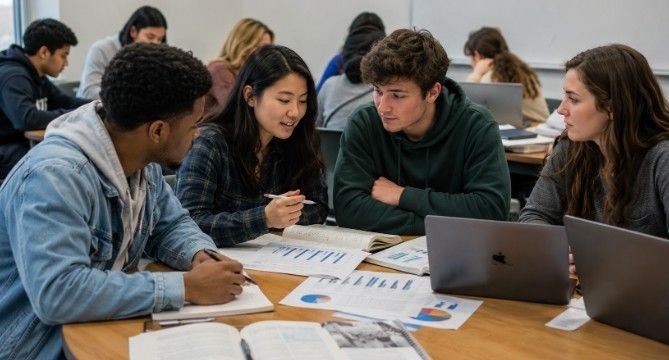
Watching students tackle the same classroom challenge often reveals a surprising pattern. Some immediately search for answers, while others pause, ask questions, and explore different possibilities. That difference often comes down to critical thinking skills for students. In a world filled with information, opinions, and AI-generated content, learning how to think clearly is becoming just as important as learning what to think.
Key Takeaways
- Critical thinking helps students analyze information instead of memorizing facts.
- Evaluating evidence is essential in today’s AI-driven information landscape.
- Strong reasoning improves academic performance and decision-making.
- Metacognition helps students become more effective learners.
- Regular practice strengthens problem-solving and future career readiness.
What Does Critical Thinking Really Mean?
Understanding the concept is the first step toward developing stronger thinking habits.
Critical thinking is the ability to examine information objectively, evaluate evidence, and form logical conclusions. Instead of accepting ideas at face value, students learn to question, analyze, and understand the reasoning behind them.
These skills help learners move beyond memorization. Rather than simply recalling facts for an exam, they learn how to connect concepts, identify patterns, take notes and apply knowledge to unfamiliar situations. This deeper understanding creates more confident and independent learners.
Looking Beyond The Obvious
Strong thinkers rarely settle for the first answer they find. They explore different viewpoints, compare evidence, and consider alternative explanations before reaching conclusions.
Turning Information Into Understanding
Modern students consume information from textbooks, social media, videos, and AI tools. Critical thinking helps transform that information into meaningful knowledge that can be used effectively.
Why Students Need This Superpower
Think of critical thinking as a mental GPS. Without it, students may follow information blindly. With it, they can navigate confusing situations, spot misinformation, and make smarter choices. Critical thinking skills for students make learning more engaging, help avoid common mistakes, and build confidence in everyday decision-making both inside and outside the classroom.
Learning With Purpose
Students who think critically understand why they are learning something instead of simply memorizing it. This creates stronger engagement and better long-term retention.
Making Better Choices
Whether selecting sources for a project or deciding how to manage time, critical thinking supports thoughtful and informed decision-making.
Essential Critical Thinking Skills
These core abilities form the foundation of effective reasoning and problem-solving.

Analysis
Analysis involves breaking down complex information into smaller parts. Students examine relationships between ideas, identify key details, and understand how different pieces connect to a larger concept.
Analytical thinking is particularly useful when reading academic texts, solving math problems, or conducting research projects. It helps learners uncover meaning rather than simply collecting information.
Evaluating Evidence
Not all information deserves equal trust. Students must learn how to assess the credibility, relevance, and accuracy of sources before accepting claims as facts.
This skill has become especially important in the age of social media and artificial intelligence. Evaluating evidence helps students separate reliable information from misleading content.
Recognizing Assumptions
Many arguments contain hidden beliefs or unstated ideas. Critical thinkers learn to identify these assumptions and examine whether they are supported by facts.
Recognizing assumptions helps students avoid bias, challenge stereotypes, and develop more balanced perspectives on complex issues.
Problem-Solving

Problem-solving combines logic, creativity, and practical thinking. Students use available information to identify challenges, explore options, and implement effective solutions.
This skill supports academic success while preparing learners for real-world situations where clear answers may not always exist.
Deduction And Inference
Deduction and inference involve drawing logical conclusions from available evidence. Instead of guessing, students learn to make reasoned judgments based on facts and observations.
These abilities strengthen decision-making and help students approach challenges with greater confidence.
Metacognition
Metacognition is often described as thinking about thinking. It involves monitoring personal understanding, evaluating learning strategies, and making adjustments when necessary.
Students who practice metacognition become more self-aware learners. They understand their strengths, recognize weaknesses, and continuously improve their approach to learning.
How These Skills Help In The Classroom
Critical thinking creates meaningful learning experiences that extend far beyond grades and exams.
Boosting Academic Performance
Students with strong reasoning abilities can analyze texts more effectively, construct evidence-based arguments, and solve complex problems across different subjects.
As education becomes increasingly focused on understanding rather than memorization, these skills play a vital role in academic achievement.
Connecting Learning To Life
Classroom knowledge becomes more valuable when students know how to apply it. Critical thinking helps learners transfer concepts from lessons into practical situations.
This ability makes learning more relevant and prepares students for challenges they may encounter outside school.
Preparing For Future Careers
Employers consistently rank critical thinking, adaptability, and complex problem-solving among the most valuable workplace skills.
Students who develop these abilities early gain a significant advantage in higher education and future careers.
Critical Thinking Skills For Students In Real Life
The true value of these skills becomes clear when applied to everyday situations.

A student researching a science project must compare sources, evaluate evidence, and determine which information is trustworthy. These actions rely directly on critical thinking.
Outside the classroom, students use the same abilities when making purchasing decisions, evaluating online claims, or resolving disagreements with friends. Strong thinking skills help them navigate uncertainty with confidence.
The rise of artificial intelligence has made this even more important. AI can generate answers quickly, but students still need critical thinking to verify accuracy, identify bias, and make informed judgments.
How To Build Critical Thinking Skills For Students
Developing these abilities requires consistent practice and intentional effort.
The process begins by encouraging curiosity in minds. Students should regularly ask why, how, and what evidence supports a particular claim. These questions promote deeper understanding and stronger reasoning.
The next step involves exploring multiple perspectives. Reading diverse viewpoints helps learners understand different sides of an issue and avoid narrow thinking patterns.
Students should also explain their reasoning whenever they reach conclusions. Verbalizing thought processes strengthens logic and reveals potential gaps in understanding.
Reflection plays an equally important role. Reviewing decisions, evaluating outcomes, and identifying lessons learned helps students continuously improve their thinking habits.
Finally, productive struggle should be encouraged. Instead of immediately providing answers, educators and parents can guide students toward discovering solutions independently. This develops resilience, confidence, and stronger analytical abilities.
Frequently Asked Questions
1. What are the 5 critical thinking skills for students?
The five critical thinking skills for students include analysis, evaluation, inference, interpretation, and explanation. Together, these abilities help learners assess information, solve problems, and make logical decisions based on evidence rather than assumptions.
2. What are the 5 C’s of critical thinking?
The 5 C’s commonly refer to critical thinking, creativity, communication, collaboration, and curiosity. These interconnected skills help students approach challenges thoughtfully, work effectively with others, and adapt to changing learning environments.
3. What are the 4 C’s of critical thinking?
The 4 C’s are critical thinking, creativity, communication, and collaboration. They are widely recognized as essential twenty-first-century skills that support academic achievement, innovation, and workplace success.
4. What are the 5 core critical thinking skills?
The five core critical thinking skills are analysis, evaluation, inference, interpretation, and explanation. These abilities enable students to process information objectively, assess evidence, and develop well-supported conclusions in academic and real-world situations.
Level Up Your Learning Journey
Success today depends on more than remembering information. Critical thinking skills for students help learners evaluate evidence, solve complex problems, challenge assumptions, and make informed decisions with confidence. As classrooms, workplaces, and technology continue to evolve, students who develop these skills will be better prepared to learn independently, adapt quickly, and thrive in every stage of life.