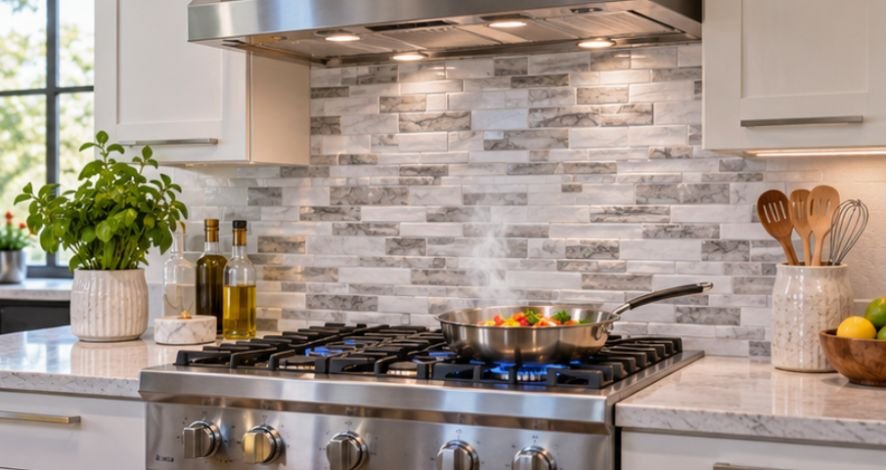
A peel-and-stick backsplash can transform a kitchen in an afternoon, but the wrong material behind a stove can start peeling, discoloring, or warping after repeated cooking. Some products tolerate moderate warmth yet cannot withstand direct flames or sustained high temperatures.
Understanding peel and stick backsplash heat resistance behind stove installations is essential before covering the wall. The good news is that certain adhesive tiles are designed for use near cooking appliances. The catch is that their safety depends on the tile material, stove type, installation distance, and manufacturer’s temperature limits.
Can You Safely Install Peel-and-Stick Backsplash Behind a Stove?
Yes, certain heat-resistant peel-and-stick tiles can be installed behind residential stoves, provided the installation follows both the tile manufacturer’s instructions and the appliance’s required clearances.
However, heat-resistant does not mean fireproof.
Many decorative backsplash products contain vinyl, PVC, polymers, or adhesive layers that can deteriorate under excessive heat. Their surfaces may remain attractive while the adhesive underneath gradually loses its grip.
Smart Tiles, for example, specifies a maximum wall-surface temperature of 120°F (49°C) for its standard tiles and recommends an eight-inch tile-free area behind stoves without a protective rear panel.
That guidance applies to its products, not every peel-and-stick backsplash.
The National Fire Protection Association reports that cooking equipment was involved in approximately 48% of reported home structure fires annually during 2020–2024. Choosing suitable materials around cooking appliances is therefore more than a cosmetic decision.
Why Heat Damages Some Adhesive Backsplashes
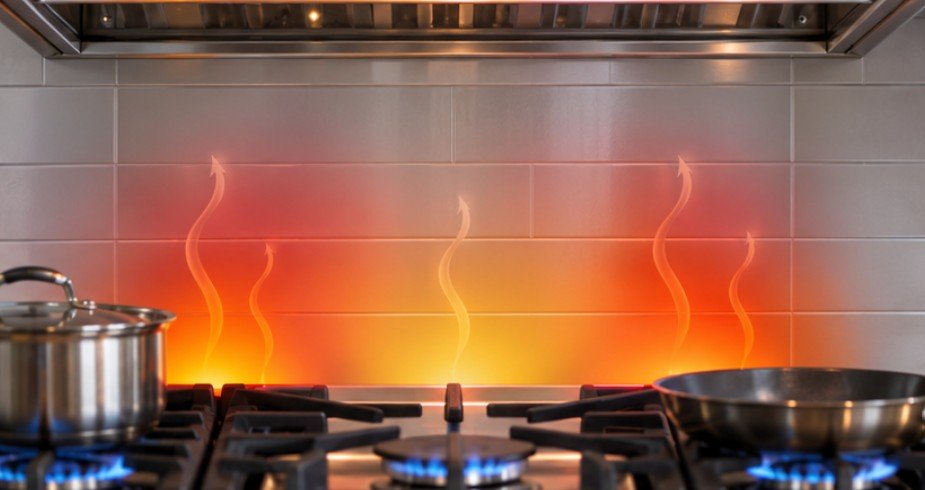
A backsplash experiences different temperatures depending on the burner location, cookware dimensions, ventilation, and length of cooking.
Three components deserve attention.
Decorative Surface Materials
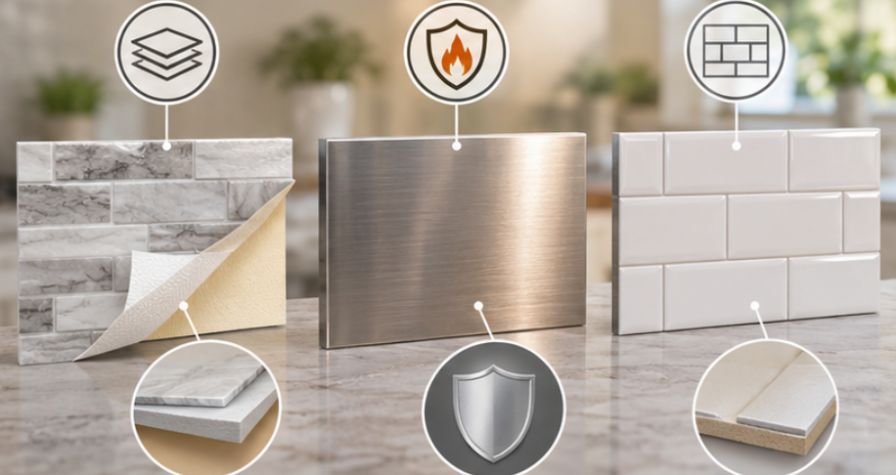
Vinyl and PVC tiles may soften, shrink, yellow, or distort when exposed to temperatures exceeding their specifications.
Gel-style decorative tiles can also develop bubbles or lose their original texture. Metal-faced products sometimes tolerate higher surface temperatures, although their adhesive backing may still be vulnerable.
Adhesive Strength
Pressure-sensitive adhesives hold decorative tiles against the wall. Repeated heating and cooling can weaken that bond, particularly along corners and seams.
Grease, moisture, and poorly prepared painted surfaces further increase the likelihood of peeling.
Heat Accumulation
A backsplash may withstand brief warmth but deteriorate during prolonged cooking.
Large skillets, oversized stockpots, and high-output rear burners can direct additional heat toward the wall.
Consequently, a tile that survives occasional cooking may perform differently in a household using the stove several hours daily.
How Much Clearance Is Necessary Behind the Stove?
There is no universal eight-inch clearance rule applicable to every peel-and-stick product or cooking appliance.
Smart Tiles recommends leaving eight inches without its tiles behind a stove lacking a rear control panel or metal backguard. Other manufacturers may establish different restrictions.
The International Code Council’s residential code guidance emphasizes maintaining appliance clearances specified by the manufacturer.
For homeowners, the safest approach is to check both sets of instructions and follow whichever applicable requirement is more restrictive.
Measure from the heat-producing area identified in the relevant installation instructions, rather than assuming the countertop or stove control panel is the correct starting point. If the clearance cannot be achieved, choose a different backsplash material.
Choosing a Backsplash That Can Handle Kitchen Heat
Not every product marketed as a kitchen backsplash is appropriate directly behind a cooktop.
Look Beyond the Heat-Resistant Label
Before purchasing, examine the technical specifications for:
- Maximum permitted surface temperature.
- Approval for installation behind gas or electric ranges.
- Minimum distance from flames and heating elements.
- Adhesive temperature limitations.
- Cleaning and moisture-resistance requirements.
A product advertised as waterproof or suitable for kitchens is not necessarily approved for high-temperature locations.
Consider Materials With Greater Durability
Traditional ceramic or porcelain tile provides a more dependable finish in areas subject to frequent cooking heat.
Stainless-steel backsplashes offer another practical solution because their exposed surfaces resist heat and are relatively easy to clean.
However, mounting materials, wall construction, and appliance clearances still matter. A thin metal sheet placed over combustible material does not automatically create a code-compliant heat shield.
For kitchens with frequent high-temperature cooking, professionally installed ceramic tile or an approved metal backsplash is generally preferable to decorative vinyl.
A Practical Five-Step Installation and Safety Check
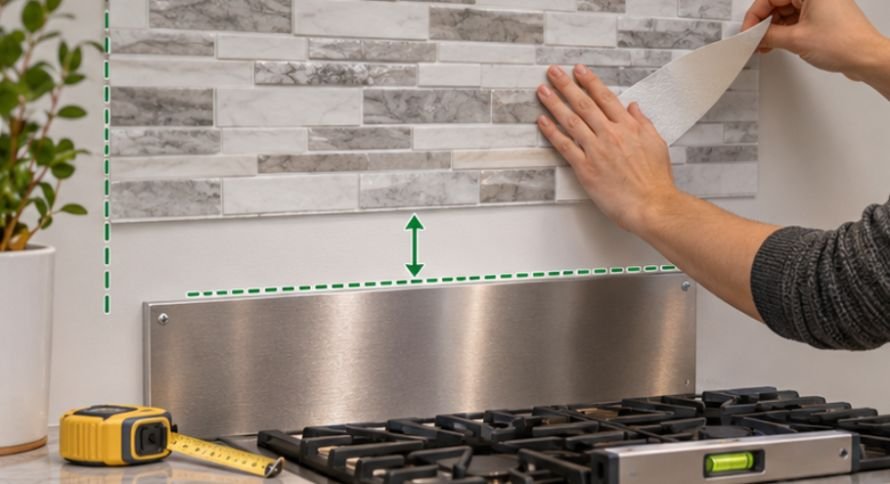
The best way to evaluate peel and stick backsplash heat resistance behind stove areas is to inspect the actual cooking setup before purchasing materials.
Step 1: Identify Your Stove’s Requirements
Locate the range model number and download its installation manual.
Check for required clearances around combustible materials and any restrictions affecting wall finishes.
Step 2: Confirm the Tile’s Temperature Rating
Read the manufacturer’s installation instructions rather than relying on marketplace descriptions.
If no temperature limit or stove-use guidance is provided, avoid using the product immediately behind high-heat burners.
Step 3: Inspect the Existing Wall
Make sure the installation surface is smooth, dry, structurally sound, and free from grease.
Proper wall preparation also plays an important role in achieving a smooth, lasting finish, as these wall painting ideas demonstrate.
Loose paint, textured finishes, and damaged drywall can reduce adhesion even when temperatures remain acceptable.
Step 4: Test Adhesion in an Approved Location
Install a sample tile in a location explicitly permitted by the manufacturer.
Observe it during ordinary cooking over several days or weeks for curling, bubbling, discoloration, or weakening adhesion.
A successful sample test demonstrates initial performance, not fire safety certification.
Step 5: Inspect the Finished Backsplash Regularly
After installation, examine seams and edges for movement or deterioration.
Stop using affected burners and investigate if the tiles develop scorching, unusual odors, significant bubbling, or other signs of overheating.
Common Installation Mistakes That Create Problems
One frequent mistake is assuming that all peel-and-stick tiles perform identically. Products with similar appearances can have substantially different temperature ratings.
Another is applying tiles directly above rear gas burners without verifying the necessary clearance.
Homeowners also sometimes attempt to improve heat resistance by adding ordinary construction adhesive. Unless the tile manufacturer specifically approves it, extra adhesive does not make a product suitable for higher temperatures.
The U.S. Fire Administration emphasizes controlling cooking-related fire hazards, including excessive heat and unattended equipment.
Keeping the stove clean, maintaining adequate ventilation, and observing the backsplash for deterioration are sensible ongoing precautions.
Frequently Asked Questions
1. Can peel-and-stick backsplash melt behind a gas stove?
Yes. Some vinyl, PVC, and polymer backsplash products can soften or deform near open flames or excessive heat. Use only products approved for the specific installation.
2. What temperature can peel-and-stick backsplash withstand?
Temperature limits vary. Standard Smart Tiles specify a maximum surface temperature of 120°F (49°C), while other products may have different ratings. Always confirm the manufacturer’s specifications.
3. Is peel and stick backsplash heat resistance behind stove installations reliable?
It can be reliable when the product is explicitly approved, required clearances are maintained, and the installation surface is properly prepared. Performance varies by product and cooking conditions.
4. Can stainless steel protect peel-and-stick tiles from stove heat?
An appropriately designed metal backsplash can protect the wall area, but a thin metal sheet alone does not guarantee adequate protection or permit reduced appliance clearances.
The Right Backsplash Starts With the Right Temperature Rating
A beautiful kitchen upgrade should not require homeowners to gamble on material safety. Peel-and-stick backsplash can work behind certain stoves, but successful installation depends on understanding heat exposure rather than trusting decorative packaging.
Check the appliance manual, confirm the tile manufacturer’s temperature limits, and respect required separation distances before applying anything to the wall.
If your stove generates intense heat or has limited rear clearance, traditional ceramic tile or a properly installed metal backsplash offers a more dependable alternative.
The smartest kitchen improvement is one that looks good after installation and remains safe through years of everyday cooking.