
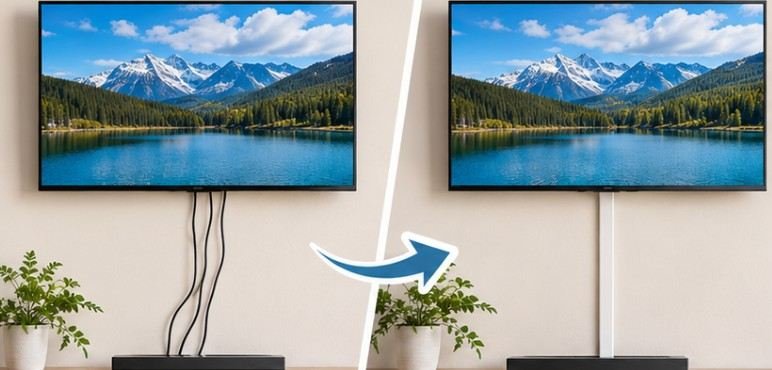
A wall-mounted television can make a living room look modern and spacious, but dangling cables often ruin the effect. The good news? You don’t need to open your walls, hire an electrician, or undertake an expensive renovation to create a cleaner setup.
Learning how to hide wires on wall mounted tv without cutting drywall starts with choosing the right cable management solution. Paintable cord covers, adhesive cable clips, fabric sleeves, and strategically positioned furniture can conceal unsightly wires while keeping them accessible.
The important distinction is between hiding cables and hiding them safely. A professional-looking installation should protect electrical connections, accommodate TV movement, and allow easy access when upgrading equipment.
7 Practical Ways to Conceal Wall-Mounted TV Wires
1. Install Paintable Cable Raceways for a Seamless Finish
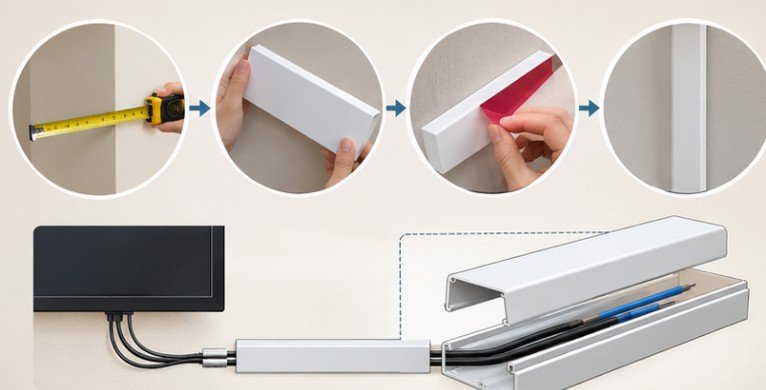
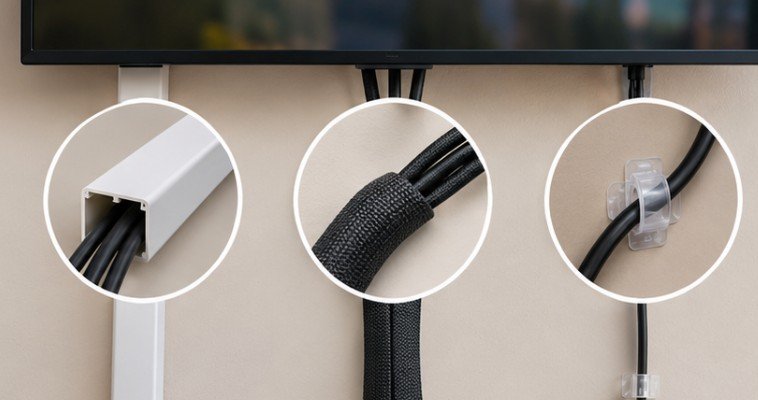
Surface-mounted cable raceways are among the most practical solutions for hiding TV cords without modifying drywall.
These plastic channels attach directly to the wall and create a dedicated pathway between your television and entertainment console.
Products such as Mount-It! and SANUS on-wall cable concealer kits offer streamlined designs that can blend into existing decor.
For installation, measure the distance between your television and furniture, identify an appropriate cord-cover system, clean the wall, and attach the channel according to its instructions.
Paintable models can be finished in your existing wall color.
Choose a raceway specifically approved for the cables it will contain. Not every decorative channel is suitable for electrical power cords.
2. Use Fabric Cord Sleeves for Multiple Cables
Fabric cable sleeves provide a flexible alternative when several wires run together.
Typically secured using zippers, hook-and-loop fasteners, or flexible wrapping, these sleeves organize HDMI cables, Ethernet connections, and other low-voltage wires into a neater bundle.
They work particularly well behind televisions mounted above media cabinets.
Black sleeves blend with dark walls and furniture, while lighter options suit neutral interiors.
Unlike rigid raceways, flexible sleeves can accommodate limited movement, although they should never be pulled tight.
Keep power cords separate where required by the sleeve manufacturer’s instructions, and avoid compressing cables into an overcrowded bundle.
3. Hide the Lower Cable Run Behind a Media Console
Sometimes the easiest solution requires no additional wall accessories. Positioning a tall entertainment console directly beneath the television can conceal much of the visible cable drop.
A cabinet with rear cable openings allows HDMI connections and other electronics to remain organized without exposing tangled wires.
For a cleaner appearance, choose furniture with dedicated cable-management openings and enough space for streaming devices, gaming consoles, and ventilation.
The Consumer Product Safety Commission recommends securing televisions and furniture to prevent dangerous tip-over accidents. This is particularly important in households with children.
4. Attach Adhesive Cable Clips Along Existing Edges
Adhesive cable clips are useful when wires need to follow a discreet route around furniture or along a wall.
Rather than allowing cables to hang vertically, you can guide suitable low-voltage cables toward the nearest furniture edge.
For example, an HDMI cable can follow the underside of a floating shelf before disappearing behind a media cabinet.
Choose clips that fit the cable diameter without squeezing or sharply bending the insulation.
Avoid fastening electrical cords with nails or staples. The Electrical Safety Foundation International’s home electrical safety guidance warns that damaged or improperly routed cords can create electrical hazards. Adhesive clips should also be tested on an inconspicuous painted area before installation.
5. Conceal Cables With Decorative Wall Panels
Decorative panels provide a design-oriented alternative for homeowners who dislike visible plastic cord covers.
Wood slats, removable accent panels, and shallow wall-mounted decorative features can visually disguise appropriate low-voltage cable routes.
However, they must remain accessible and should not enclose power cords unless the arrangement is specifically approved for that purpose.
A narrow wooden accent feature positioned beneath the television can create a coordinated appearance without extensive construction.
This method is especially attractive in contemporary living rooms where decorative wall treatments already complement the furniture.
6. Choose a TV Floor Stand With Integrated Cable Management
A floor-mounted television stand can eliminate the need for a conventional wall-mounted setup. Some models, including the FITUEYES Master Series, incorporate internal channels that help organize cables.
These stands can be useful for renters who want a polished television arrangement without additional wall modifications. Look for a model compatible with your television’s size, weight, and VESA mounting pattern.
Also consider stability. The American Academy of Pediatrics emphasizes securing televisions and furniture to reduce injuries from tip-over accidents. Follow the manufacturer’s anchoring requirements even when using a freestanding stand.
7. Reduce Visible Cables With a Smarter Device Layout
Sometimes hiding wires becomes easier simply by reducing their number. Streaming sticks, compact media players, and wireless networking options may eliminate unnecessary connections between your television and entertainment console.
For example, switching from a separate streaming box to a compatible streaming stick can remove a long HDMI cable. However, wireless accessories still require power in many cases.
Keep essential connections accessible, particularly if you frequently connect gaming systems or replace entertainment equipment.
How to Hide Wires on Wall Mounted TV Without Cutting Drywall: A DIY Installation Plan
A successful installation begins before attaching anything to the wall. Follow this straightforward process to create a cleaner arrangement.
Step 1: Identify and Sort Every Cable
Unplug the television and connected equipment. Separate power cords from HDMI, Ethernet, antenna, and audio cables. This helps determine which cable-management products are appropriate. Inspect each cord for fraying, damaged insulation, or loose connectors before proceeding.
Step 2: Measure the Cable Route
Measure the distance from the television’s cable exit point to the nearest cabinet or outlet.
For example, a television positioned 48 inches above a console might need a cable channel slightly longer than the exposed vertical distance, depending on connector placement. Leave sufficient slack for connection changes and mount movement.
Step 3: Select an Appropriate Concealer
Choose a paintable raceway for a straight, visible route or flexible sleeves for low-voltage cables grouped behind furniture. Check product specifications before purchasing. Confirm cable capacity, mounting compatibility, and whether electrical power cords are permitted.
Step 4: Prepare and Install
Clean and dry the mounting surface. Position the channel temporarily with painter’s tape to check alignment before permanently attaching it. Follow adhesive curing instructions, and avoid installing clips or covers over damaged paint.
Step 5: Reconnect and Inspect
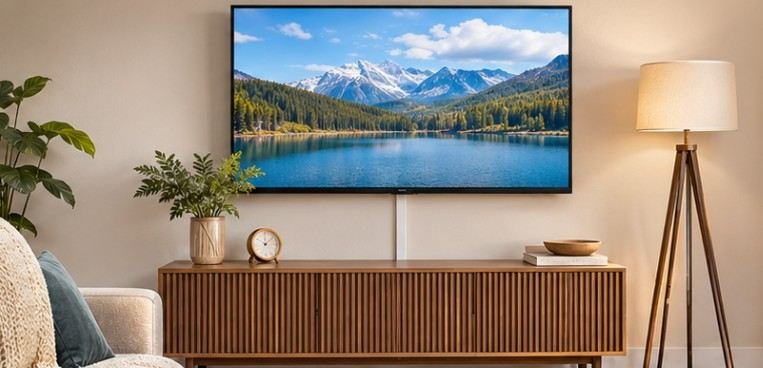
Reconnect equipment and verify that each device functions correctly. If your television has an adjustable mount, move it gently through its normal range to confirm that cables do not stretch, pinch, or rub against sharp edges.
Finally, check that outlets remain accessible and the arrangement does not obstruct ventilation.
Important Electrical Safety Mistakes to Avoid
A tidy installation is not automatically a safe installation. One common mistake involves threading a television’s original power cord through a hole in the drywall.
The Occupational Safety and Health Administration explains restrictions on concealing flexible power cords inside building walls. Although OSHA’s rules concern workplaces, the underlying electrical hazards are relevant to residential installations.
Avoid running ordinary power cords through walls, placing extension cords beneath rugs, or trapping wires behind heavy furniture.
The National Fire Protection Association also documents restrictions involving flexible cords used as substitutes for permanent wiring.
If an outlet is too far from your television, consider having a licensed electrician install a properly located receptacle rather than relying on a permanent extension cord.
Frequently Asked Questions
1. Can I hide TV wires without drilling holes?
Yes. Adhesive cable clips, suitable surface-mounted raceways, and furniture-based concealment can organize television cables without drilling new holes.
2. Are adhesive cable covers safe for TV wires?
They can be safe when properly installed and rated for the cables involved. Always verify whether a particular product permits electrical power cords.
3. What is the cheapest way to hide TV cables?
Rearranging existing furniture and organizing low-voltage cables with reusable ties are inexpensive starting points. Adhesive clips and basic cable sleeves offer additional concealment.
4. Can renters conceal wall-mounted television cables?
Yes. Removable cable organizers and furniture-based solutions can minimize alterations. However, renters should review lease restrictions and test adhesives before installation.
The Finishing Touch That Makes the Difference
Understanding how to hide wires on wall mounted tv without cutting drywall allows homeowners to improve their entertainment spaces without turning a simple decorating project into major construction.
The most effective solution is not necessarily the most expensive. A carefully positioned media console, properly selected cable raceway, or organized sleeve can dramatically improve the appearance of an otherwise cluttered wall.
I recommend beginning with cable sorting and measuring before purchasing accessories. Once you understand where each wire needs to travel, the best solution becomes much easier to identify.
A polished TV wall isn’t defined by completely invisible wiring. It’s defined by thoughtful organization, safe connections, and a design that feels effortless.