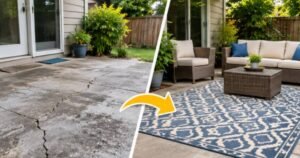
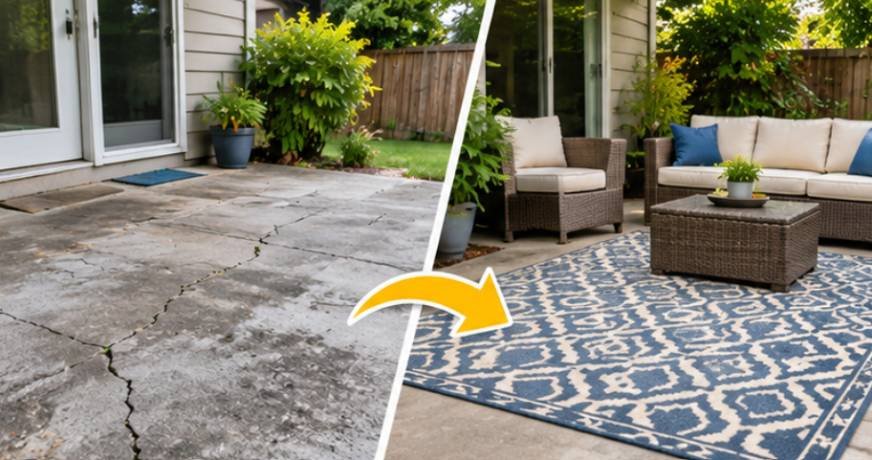
An unattractive concrete patio doesn’t necessarily need demolition or an expensive renovation. Sometimes, a $50 outdoor rug or a fresh coat of concrete paint can transform an ordinary backyard into a comfortable gathering space.
If you’re wondering what is the cheapest way to cover concrete patio, the answer depends on your patio’s condition, the appearance you want, and how long you expect the improvement to last. Outdoor rugs offer the quickest transformation, while concrete paint and solid-color stains provide affordable, longer-lasting finishes.
The smartest approach isn’t always the cheapest material. It’s choosing something that won’t create drainage problems, require constant repairs, or cost more to maintain than you originally saved.
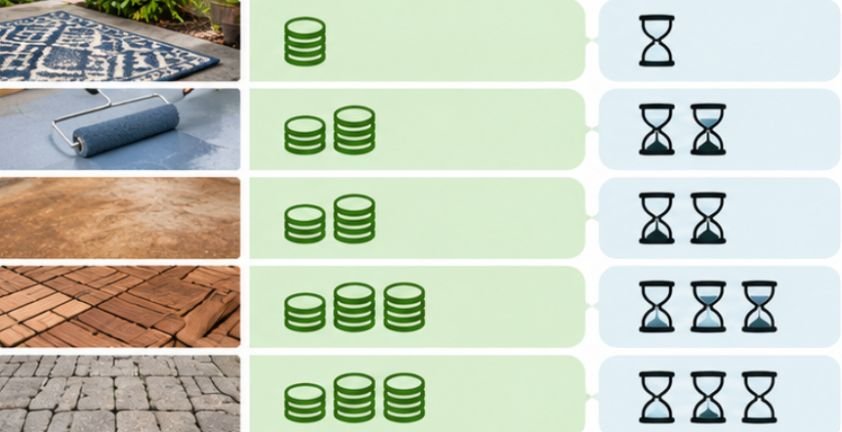
7 Affordable Ways to Cover an Existing Concrete Patio
Before purchasing materials, determine whether your patio needs cosmetic improvement or actual repairs. A stable concrete slab with discoloration offers more inexpensive options than one with serious cracks or uneven sections.
1. Outdoor Rugs: The Easiest Temporary Makeover
An outdoor area rug is often the cheapest solution for homeowners who want immediate results without permanently changing their concrete.
Weather-resistant polypropylene rugs can cover stained surfaces, soften outdoor seating areas, and introduce color without specialized equipment.
Budget-friendly rugs commonly cost around 30–150, depending on size and construction.
Choose breathable, quick-drying materials designed for outdoor exposure. Lift the rug periodically to remove trapped debris and allow moisture to evaporate.
For renters, this removable option is particularly appealing.
2. Concrete Paint: Best for Large, Plain Surfaces
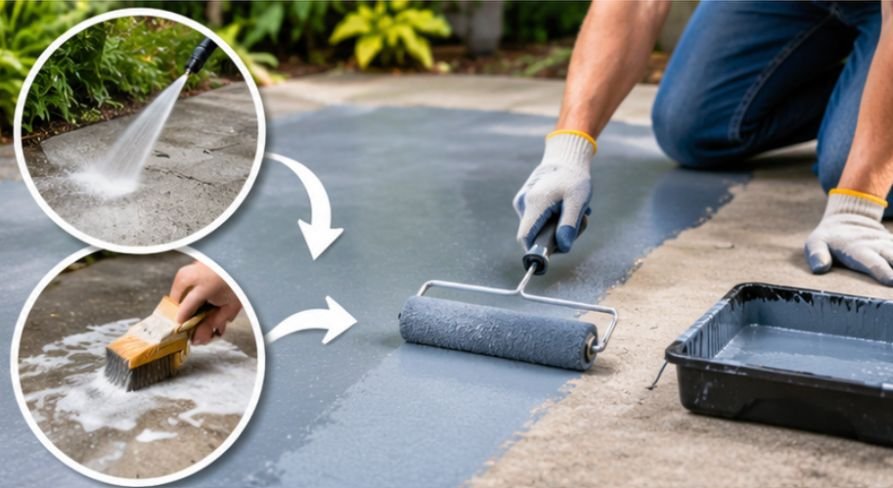
Concrete paint offers one of the lowest material costs per square foot when covering an entire patio.
Similar cost-saving techniques can be used indoors, such as painting kitchen cabinets without stripping them, which allows homeowners to refresh existing surfaces without undertaking a complete renovation.
A properly selected exterior porch-and-patio coating can conceal discoloration, create a uniform appearance, and improve the look of weathered concrete.
Expect roughly 30–70 per gallon for many common products, although coverage and preparation expenses vary.
Choose paint specifically rated for exterior concrete floors, not ordinary wall paint.
The American Concrete Institute emphasizes evaluating concrete conditions and preparing surfaces according to coating requirements. Poor preparation can undermine adhesion and durability.
Paint may eventually peel or wear in heavily trafficked areas, especially where moisture becomes trapped.
3. Solid-Color Concrete Stain: A Natural-Looking Alternative
Concrete stain can refresh an aging patio while preserving more of its original surface character.
Water-based stains come in numerous shades, including charcoal, sandstone, and warm brown. Depending on the formulation, they may penetrate the concrete or form a colored surface coating.
Some penetrating stains resist peeling better than paint, although they cannot hide major cracks or uneven patches.
Materials may cost approximately 40–100 for smaller DIY projects, with larger patios requiring additional product and possibly a compatible sealer.
Always test the stain in an inconspicuous location because existing sealers, repairs, and varying concrete porosity can affect the final color.
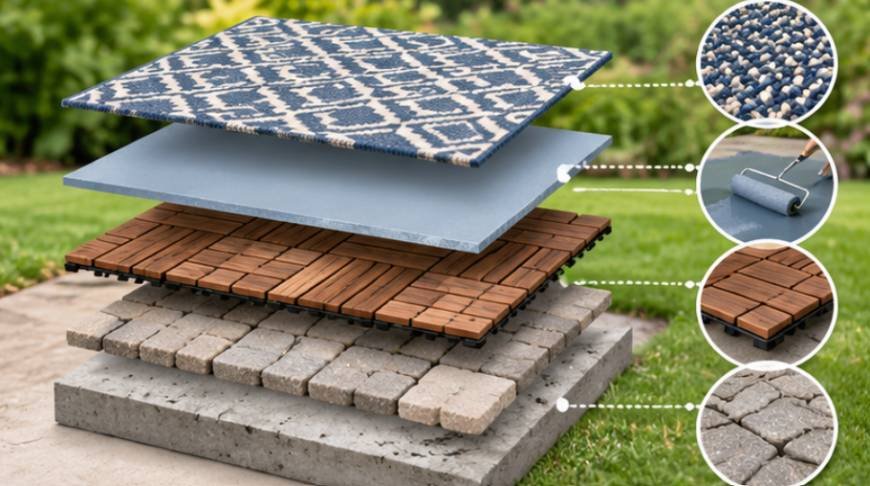
4. Interlocking Deck Tiles: A Quick Weekend Upgrade
Interlocking outdoor deck tiles provide the appearance of wood or composite decking without building a traditional deck.
Most systems use modular squares that snap together over suitable flat, stable concrete.
Budget plastic models may cost around 2.50–4 per square foot, while composite and wood alternatives often cost considerably more.
Look for drainage channels beneath the tiles and UV-resistant construction.
However, deck tiles increase floor height. Measure clearance beneath exterior doors and confirm that the existing patio drains properly before installation.
5. Concrete Pavers: A More Substantial Surface Upgrade
Concrete pavers create a traditional patio appearance with considerably more texture and design flexibility than painted concrete.
Basic pavers can be relatively inexpensive individually, but installation materials, edging, leveling, and labor increase the total cost.
Installing pavers over an existing slab requires a compatible system with proper drainage, edge restraints, and sufficient height clearance. Simply placing loose pavers directly on concrete can result in shifting and trip hazards.
The Environmental Protection Agency’s moisture-control guidance explains why directing water away from buildings matters.
Pavers make the most sense when you want a substantial visual change and have room in your budget for proper installation.
6. Concrete Resurfacer: Ideal for Worn but Stable Slabs
A cement-based resurfacing product can improve concrete with widespread surface wear, shallow imperfections, or an unattractive finish.
Unlike ordinary paint, resurfacer creates a new cementitious surface layer.
Material costs often begin around 0.50–2 per square foot, depending on the product and required thickness.
However, resurfacing demands careful cleaning, suitable weather, and precise mixing.
It also cannot permanently repair a slab experiencing structural movement. Active cracks may reappear through the new surface.
7. DIY Painted Patterns: Get a Tile Look Without Tiles
Decorative stencils can make ordinary concrete resemble patterned tile or geometric stonework.
Use exterior-rated concrete paint, painter’s tape, and reusable stencils to create a customized design.
This approach combines the affordability of paint with the appearance of a more expensive installation.
Choose subtle patterns that complement your home’s exterior. A simple two-color design usually requires less time and material than intricate multicolor artwork.
Check Your Patio Before Spending Money
Even an inexpensive covering becomes costly if moisture or structural damage ruins the installation.
Similar precautions apply to indoor surface upgrades, such as installing a peel-and-stick backsplash behind a stove, where checking material suitability and heat resistance beforehand helps prevent installation problems.
Use this simple inspection process before choosing materials.
- Examine cracks. Hairline cracks may need minor repairs, while widening cracks or displaced sections deserve professional evaluation.
- Check drainage. After rainfall, look for standing water, especially near the home’s foundation.
- Inspect surface stability. Loose, flaking, or crumbling concrete may require repair before receiving a coating.
- Measure available clearance. Raised coverings must not interfere with doors, steps, or drainage openings.
- Test moisture and existing coatings. Follow the selected product’s instructions to determine whether the slab is suitable.
Pressure washing can help clean a concrete surface, but it requires precautions. The Centers for Disease Control and Prevention warns that high-pressure spray can cause severe injuries.
Avoid directing contaminated cleaning runoff into storm drains. The EPA’s stormwater guidance recommends collecting wastewater appropriately.
Frequently Asked Questions
1. What is the cheapest way to cover concrete patio without removing the existing slab?
Outdoor rugs are usually the easiest temporary option. For full-surface coverage, exterior concrete paint is often among the least expensive DIY solutions.
2. Can you install outdoor flooring directly over concrete?
Yes, certain interlocking deck tiles and approved paver systems can be installed over stable concrete. Always follow manufacturer instructions and check drainage and clearance requirements.
3. Will painting concrete hide cracks?
Paint may conceal minor surface discoloration and hairline imperfections, but larger cracks require appropriate repairs before painting.
4. How long does a painted concrete patio last?
Durability varies with coating quality, surface preparation, weather, and traffic. Periodic cleaning and eventual recoating should be expected.
Better Patio Doesn’t Require a Bigger Budget
The most effective patio improvement starts with understanding what the concrete actually needs. A structurally sound slab with unattractive stains may need nothing more than cleaning and an affordable finish.
For homeowners seeking minimal expense, I would prioritize outdoor rugs for temporary coverage and concrete paint for larger permanent makeovers. Those options offer flexibility without requiring extensive construction.
If the patio has significant damage, addressing its underlying condition matters more than covering the evidence.
Ultimately, the best budget-friendly outdoor upgrade isn’t the one with the lowest price tag. It’s the one that improves your space without creating another expensive project next season.