
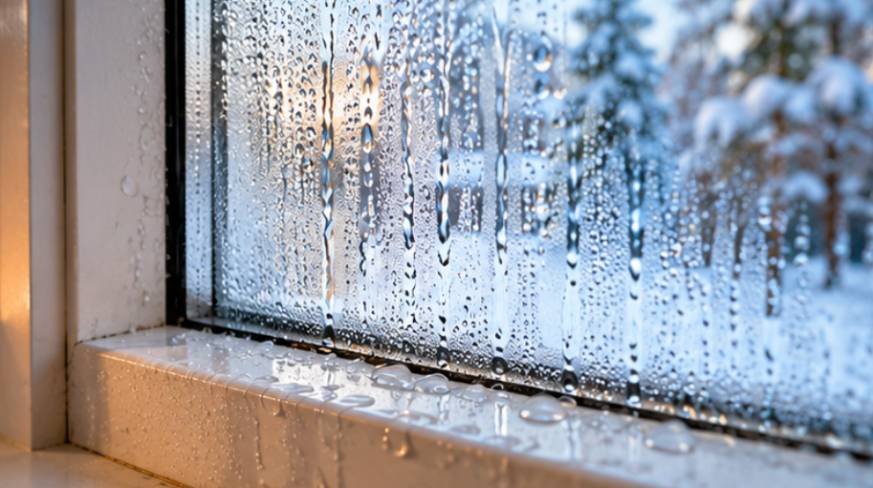
Those tiny water droplets collecting on your windows every winter morning could be warning you about a bigger moisture problem. While foggy glass might seem harmless, persistent condensation can damage wooden frames, encourage mold growth, and leave your home feeling damp.
The good news? Learning how to stop condensation on inside windows in winter doesn’t necessarily require expensive replacement windows. Most homeowners can reduce the problem by adjusting indoor humidity, improving ventilation, and keeping window surfaces warmer.
Here’s what actually works, why condensation keeps returning, and how to protect your windows throughout the coldest months.
Why Do Windows Get Wet on the Inside During Winter?
Winter window condensation happens because indoor air contains moisture, even when your home feels perfectly dry.
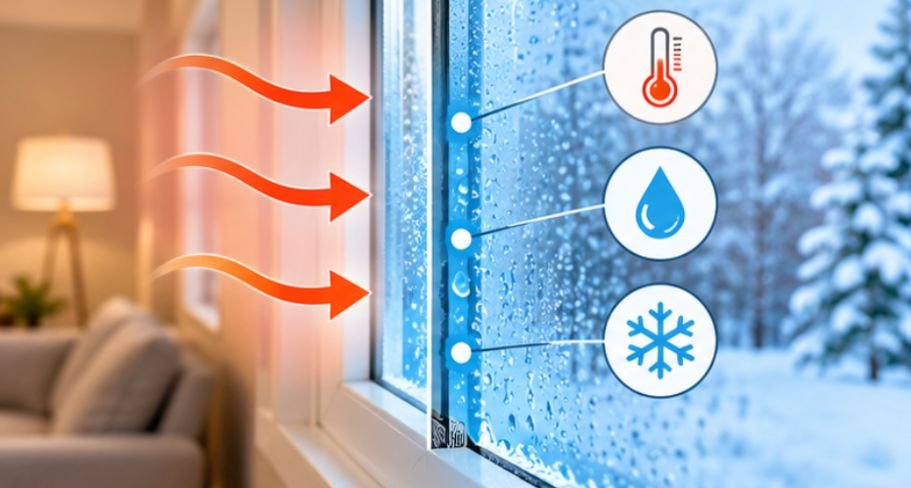
When warm air touches cold window glass, its temperature drops. Once it reaches the dew point, some of its water vapor turns into liquid droplets.
For example, imagine your living room is heated to 70°F while outdoor temperatures drop below freezing. The interior glass surface may become cold enough for moisture to collect, particularly on older single-pane windows.
According to the University of Minnesota Extension, everyday activities such as cooking, bathing, breathing, and operating humidifiers contribute to indoor moisture.
The problem becomes more noticeable during winter because the temperature difference between indoor air and window glass increases.
Why Excess Window Moisture Matters
Occasional light fogging isn’t necessarily an emergency. However, condensation that regularly drips onto window sills can create lasting damage.
Wooden frames may swell, paint can peel, and moisture trapped around window trim may support mold growth.
The Centers for Disease Control and Prevention also identifies window condensation as a warning that moisture may be accumulating on other indoor surfaces.
Addressing the problem early helps protect both your home’s condition and indoor air quality.
Start by Checking Your Home’s Humidity Level
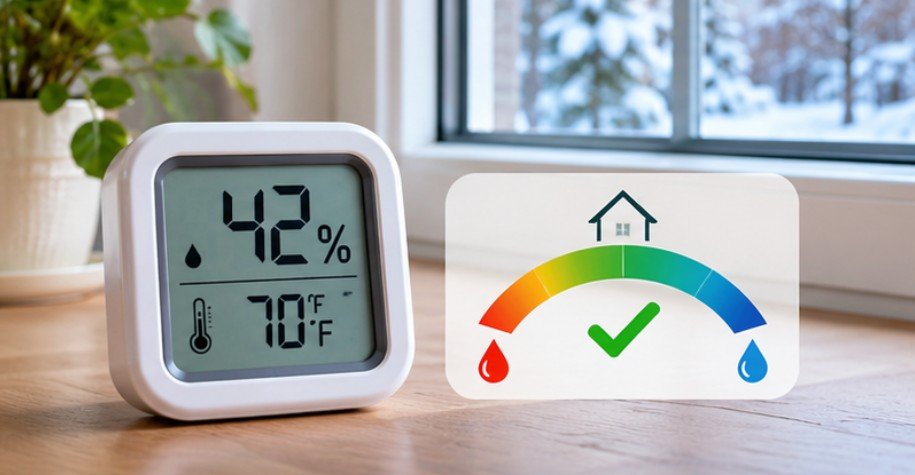
Before buying window insulation products, measure the moisture already present in your indoor air.
An inexpensive digital hygrometer displays relative humidity as a percentage. Place it away from heating vents, direct sunlight, and humidifiers for a more representative reading.
The Environmental Protection Agency recommends maintaining indoor relative humidity between 30% and 50%.
However, homes in colder regions may need lower winter humidity levels to prevent condensation.
For example, a home in Minnesota experiencing prolonged freezing temperatures may require a lower humidity setting than one in North Carolina during a mild winter.
Start around 30% to 40% and adjust downward if condensation continues. Extremely cold conditions may require levels closer to 25% to 30%, depending on the windows.
The goal isn’t to eliminate indoor moisture completely. It’s to find a balance between personal comfort and dry window surfaces.
Practical Ways to Prevent Winter Window Condensation
1. Remove Moisture Before It Spreads
Kitchens and bathrooms generate substantial amounts of humidity in relatively short periods.
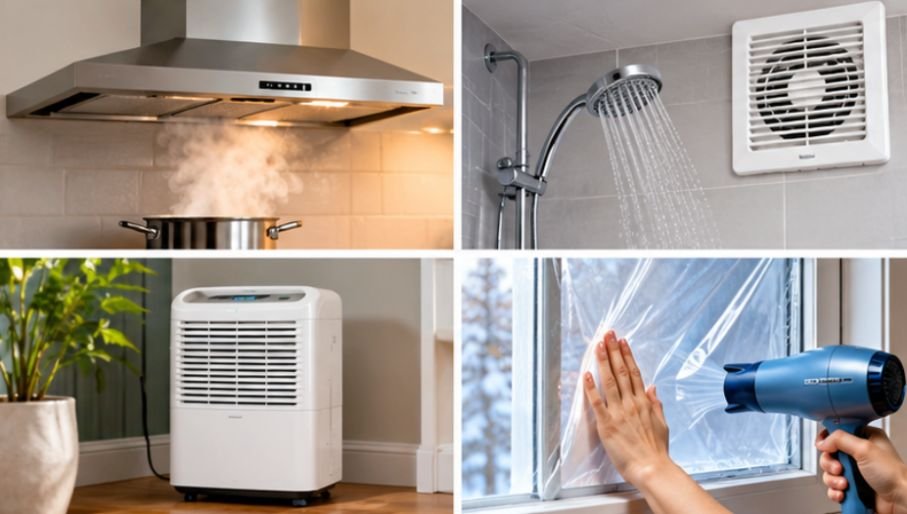
Run your bathroom exhaust fan while showering and continue operating it for approximately 15 to 20 minutes afterward. Keep the bathroom door closed during particularly steamy showers.
When cooking, use lids on pots and operate a range hood that vents outdoors.
Check whether your kitchen hood actually exhausts outside. Some models simply filter and recirculate indoor air without removing moisture.
Clothes dryers should also vent outdoors according to manufacturer instructions.
2. Adjust Humidifiers and Use a Dehumidifier When Needed
Whole-house humidifiers can make winter heating more comfortable, but excessive settings frequently contribute to foggy windows.
Lower the humidistat gradually and observe whether the glass becomes clearer over the following mornings.
For rooms with persistent moisture, consider a portable dehumidifier with an adjustable humidity setting.
Choose equipment appropriate for the room’s size and temperature. Small disposable moisture absorbers may help inside closets but generally cannot manage significant whole-room humidity.
Avoid operating a dehumidifier unnecessarily when indoor air is already dry.
3. Improve Airflow Around Cold Glass
Thick curtains and tightly closed blinds can trap cooler, damp air against windows.
Open window treatments during daylight hours to allow conditioned room air to circulate across the glass.
At night, leave a small gap where practical if condensation repeatedly forms behind the blinds.
Ceiling fans can also help distribute heated air. During winter, many homeowners use a low-speed clockwise setting, provided the fan’s blade direction creates gentle upward airflow.
Keeping air circulating throughout the home also requires clean ventilation pathways, so homeowners can learn how to clean air vents themselves to reduce accumulated dust and support better indoor airflow.
Avoid blocking heating registers with furniture or curtains.
4. Ventilate Strategically During Cold Weather
Brief ventilation can remove moisture when outdoor air contains less water vapor than indoor air.
On suitable winter days, opening a window slightly for several minutes may help replace humid indoor air.
However, avoid this approach during hazardous outdoor air quality, severe weather, or situations where opening windows creates a security concern.
For tightly sealed homes with recurring humidity problems, a properly designed mechanical ventilation system may provide more dependable results.
5. Reduce Everyday Sources of Excess Humidity
Several small household habits can make winter condensation worse.
Avoid drying large amounts of laundry indoors when possible. Move clusters of houseplants away from consistently wet window sills.
Check plumbing fixtures, basement walls, and crawl spaces for hidden moisture problems.
Also avoid relying on unvented combustion heaters, which can introduce moisture and dangerous indoor pollutants.
These adjustments are especially useful in apartments and smaller homes where moisture spreads quickly between rooms.
How to Keep Window Glass Warmer Without Major Renovations
Reducing humidity addresses one side of the problem. Improving window insulation addresses the other.
For older windows that allow cold air to enter, homeowners can explore budget-friendly window insulation methods such as weatherstripping, caulking, and clear insulation film to improve thermal comfort without replacement.
Install Interior Window Insulation Film
Clear shrink-film kits create an additional insulating air space when installed tightly over a window frame.
Clean and dry the frame, attach the film according to its instructions, and use a hair dryer if required to remove wrinkles.
These kits are particularly helpful for older windows with noticeable cold drafts.
However, poorly sealed film can allow moist air into the enclosed space, potentially causing hidden condensation.
Seal Air Leaks Around Window Frames
Inspect window edges for cracked caulk, loose weatherstripping, and damaged seals.
Apply appropriate weatherstripping to movable parts and suitable caulk to stationary gaps.
Similar air leaks can occur beneath exterior doors, where sealing drafty door gaps with suitable weatherstripping and door sweeps helps prevent cold air from entering the home.
The Department of Energy recommends weatherstripping, caulking, and insulating window coverings as practical ways to reduce winter heat loss.
Never block designated drainage openings or interfere with emergency escape windows.
Consider Interior Storm Windows
Removable interior storm panels, including properly fitted acrylic systems, can improve the thermal performance of existing windows.
They are particularly useful for homeowners who want to preserve older wooden frames.
However, installation must limit warm, humid indoor air from entering the space between the storm panel and original glass.
Otherwise, condensation may develop where it is difficult to notice.
When Is Window Replacement Actually Necessary?
Not every foggy window needs replacing.
Moisture that wipes away from the room-facing glass usually points toward indoor humidity or a cold surface.
However, fog trapped between the panes of an insulated glass unit often indicates a failed perimeter seal.
In that situation, opening curtains or adjusting humidity will not remove moisture sealed between the panes.
Homeowners may need insulated glass replacement rather than an entirely new window assembly.
If replacement becomes necessary, compare low U-factor ratings, appropriate glazing, and condensation resistance.
The Department of Energy’s window guidance explains how glazing, spacers, and frame materials influence thermal performance.
Persistent water stains, deteriorating frames, or visible mold also deserve professional inspection.
Frequently Asked Questions
1. What is the fastest way to stop condensation inside windows?
Reduce excessive indoor humidity, run bathroom and kitchen exhaust fans, and open blinds to improve airflow. Dry existing water immediately to protect window frames.
2. Should you wipe condensation off windows every morning?
Yes. Wiping moisture prevents water from accumulating on sills and trim. However, cleaning alone won’t solve the underlying humidity or cold-glass problem.
3. Does putting vinegar on windows prevent condensation?
Vinegar may help clean glass, but it doesn’t reliably prevent condensation. Controlling humidity and improving window insulation are more effective long-term solutions.
4. Can double-pane windows still develop condensation inside?
Yes. Room-side condensation can occur on double-pane windows during cold weather. Moisture trapped between the panes, however, typically suggests a failed insulated-glass seal.
Keep Your Windows Dry All Winter
Understanding how to stop condensation on inside windows in winter begins with recognizing that foggy glass is usually a symptom of moisture meeting a cold surface.
Start with a hygrometer, improve ventilation, and adjust your humidifier before investing in expensive repairs. If condensation persists, inspect drafts, insulation, and the condition of your window seals.
For homeowners in colder regions, small improvements in humidity control can make a noticeable difference throughout the heating season.
Ultimately, the best solution isn’t simply wiping away water every morning. It’s creating indoor conditions where that water is less likely to form in the first place.