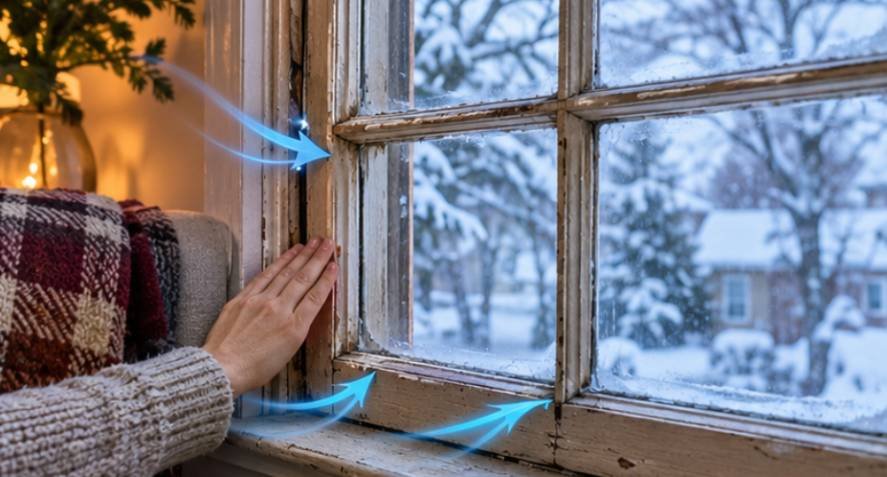
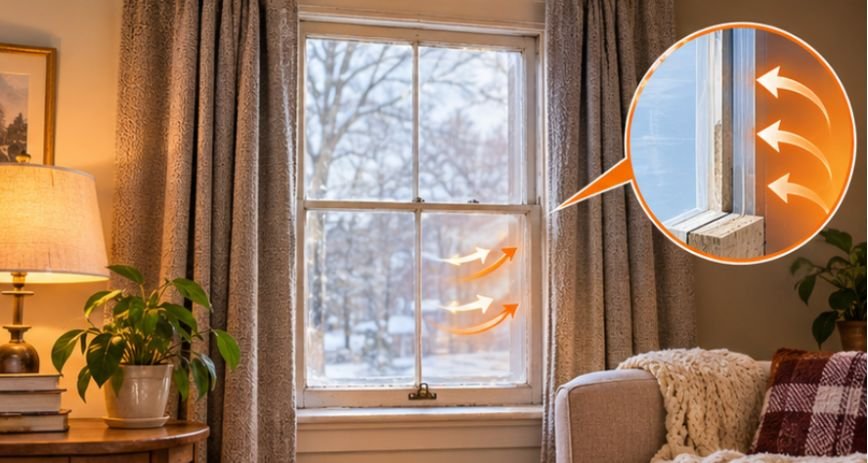
A drafty window can make an entire room feel colder, even when your heating system works perfectly. The surprising part? You may not need new windows to fix the problem.
Learning how to insulate drafty old windows for winter on a budget can help you improve indoor comfort using inexpensive materials such as removable caulk, weatherstripping, and clear insulation film.
The U.S. Department of Energy reports that approximately 30% of a home’s heating energy is lost through windows. Fortunately, several affordable improvements can reduce heat loss without replacing original wood frames or spending hundreds of dollars.
Here’s where to start, which materials work best, and how to avoid common winterproofing mistakes.
Start With a Simple Window Draft Test
Before purchasing supplies, identify exactly where cold air enters.
A window that feels cold does not necessarily have an air leak. Sometimes the glass itself is simply transferring heat.
Find Air Leaks in Five Minutes
Try this quick inspection:
- Close and lock every window securely.
- Run your hand slowly around the frame and sash edges.
- Hold a thin tissue near suspected gaps and watch for movement.
- Inspect the meeting rails, lower sash, and surrounding trim.
- Look for cracked glazing putty, loose hardware, or deteriorated seals.
Perform the test on a windy day for more noticeable results.
Avoid using candles near curtains or old painted woodwork. A tissue offers a safer way to detect airflow.
The ENERGY STAR air-leak assessment guide also explains why drafts sometimes originate from hidden openings elsewhere in the house.
Affordable Ways to Insulate Old Windows
The most effective budget strategy combines air sealing with a temporary insulating barrier.
1. Apply Removable Rope Caulk to Small Gaps
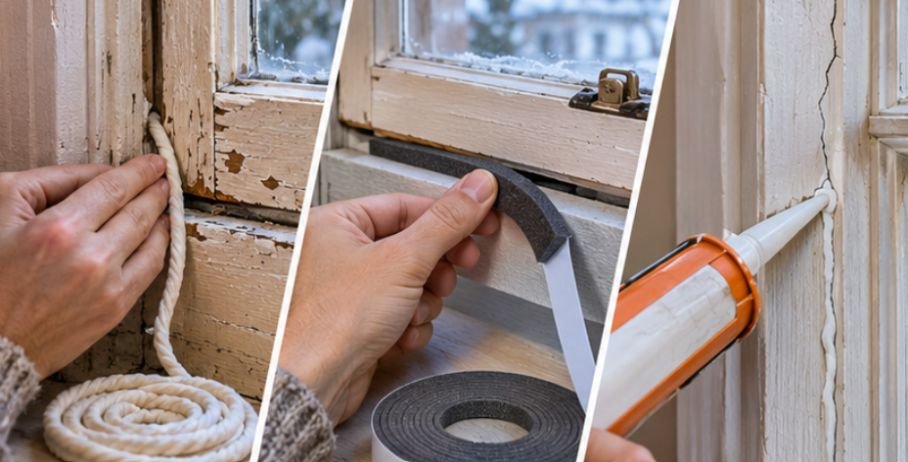
Rope caulk is a flexible, putty-like material that seals narrow openings without requiring permanent alterations.
Press it into gaps around closed window sashes, particularly where old wood frames no longer fit tightly.
A typical package costs approximately 5–10, depending on the brand and quantity. Rope caulk works particularly well for windows that remain closed throughout winter. However, it must be removed before opening the window.
Test the product on an inconspicuous area first because removal can affect fragile paint.
2. Install Foam or Rubber Weatherstripping
Adhesive weatherstripping helps seal movable window components.
Foam tape works well for irregular gaps, while rubber or silicone seals may last longer when properly fitted.
Before installation:
- Clean and dry the contact surface.
- Measure the gap before choosing thickness.
- Cut the strip to fit without stretching it.
- Confirm the window still closes and locks normally.
Expect basic weatherstripping to cost roughly 5–15 per package.
Avoid excessively thick strips, which can prevent old windows from closing properly.
3. Seal Stationary Cracks With Paintable Caulk
Small openings between window trim and the surrounding wall can create persistent drafts.
For stationary interior joints, paintable acrylic latex caulk is often an affordable solution.
Clean the area, apply a narrow bead, and smooth it according to the manufacturer’s instructions.
Never caulk sliding tracks, drainage openings, or joints needed for normal window operation.
The National Park Service’s historic-window weatherization guidance recommends repairing glazing, sealing air leaks, and improving weatherstripping before considering replacement.
This approach is particularly valuable for homeowners preserving original architectural details.
Why Clear Window Insulation Film Offers Excellent Value
Clear shrink-film kits are among the most practical inexpensive upgrades for old single-pane windows.
The plastic covers the window opening and creates a trapped air layer between the film and glass. This reduces drafts and slows heat movement.
Multipacks commonly cost around 10–25, although prices vary by window size and retailer.
How to Install Window Insulation Film
- Measure the full window opening, including the surrounding frame.
- Clean the mounting surface and allow it to dry.
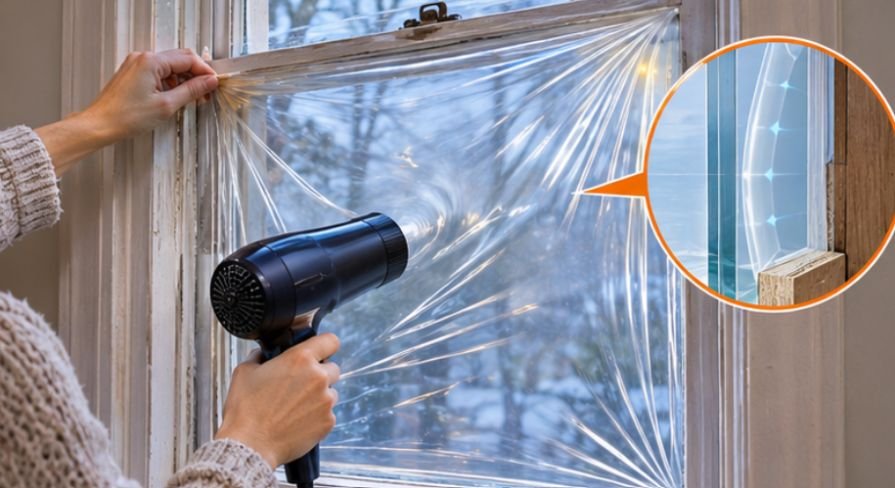
- Apply the kit’s double-sided tape around the perimeter.
- Attach the clear film, leaving enough material to cover the opening.
- Gently warm the film with a hair dryer according to the product directions.
- Trim excess material after tightening.
The result should be a smooth, nearly transparent protective layer.
For delicate historic trim, test the adhesive first. Consider a removable interior storm panel if tape could damage the finish.
Also, never cover a window that serves as a required emergency escape opening unless it can still be opened immediately without tools or special effort.
Extra Insulation Tricks That Cost Almost Nothing
Not every improvement requires a specialized product.
Use Bubble Wrap on Problem Windows
Lightly mist clean glass and press bubble wrap against it, with the bubbles facing the pane.
The trapped air pockets provide additional insulation, although the material reduces visibility.
This method is most suitable for basement, garage, or utility-room windows where a clear view matters less.
Monitor moisture buildup and remove the material if condensation develops.
Close Thermal Curtains at Night
Insulated curtains reduce exposure to cold glass and help limit heat transfer.
Open curtains on sunny winter mornings to benefit from natural solar warmth. Close them after sunset to retain more heat.
Beyond managing window treatments, homeowners can use dark hallway lighting ideas to make interior spaces feel brighter and more welcoming, even without access to natural light.
For better results, choose curtains that extend beyond the window edges and fit close to the wall.
Consider Reusable Interior Storm Panels
Magnetic, compression-fit, or other removable storm panels create another insulating layer.
Similarly, homeowners looking to improve outdoor spaces without overspending can explore the cheapest ways to cover a concrete patio using practical, budget-conscious materials.
They generally cost more than plastic film but can be reused across multiple winters.
They are worth considering when a window is structurally sound but consistently uncomfortable.
What Does Budget Window Insulation Actually Cost?
For homeowners wondering how to insulate drafty old windows for winter on a budget, the smartest approach is to spend money only where it addresses an identified problem.
Consider this illustrative shopping budget for three small windows:
- Removable rope caulk: $7
- Foam weatherstripping: $8
- Clear insulation film kit: $15
- Additional sealing supplies: $5
Estimated total: $35.
Actual costs depend on the materials, window dimensions, and existing condition.
Importantly, these purchases do not guarantee a particular reduction in utility bills.
ENERGY STAR estimates that broader home air sealing combined with insulation improvements can save an average of 15% on heating and cooling costs. That figure applies to multiple home improvements, not window film alone.
ENERGY STAR
Common Mistakes That Can Make Window Problems Worse
Budget weatherproofing should never sacrifice safety or the condition of older materials.
Ignoring Moisture and Condensation
Plastic insulation can conceal moisture trapped near deteriorated wood.
Inspect windows regularly for fogging, dampness, mold, and peeling paint.
Address water intrusion and excessive indoor humidity before adding tightly sealed coverings.
Disturbing Old Paint
Homes built before 1978 may contain lead-based paint. Sanding or scraping painted window frames can release hazardous dust.
The Environmental Protection Agency’s lead-safe renovation guidance recommends appropriate precautions and qualified contractors for work that could disturb older paint.
Sealing Windows That Need Repair
Weatherstripping cannot solve serious wood rot, broken glass, or significant structural movement.
Repair those defects before installing temporary insulation.
Likewise, avoid blocking emergency exits or necessary ventilation.
Frequently Asked Questions
1. What is the cheapest way to insulate drafty windows?
Removable rope caulk and inexpensive weatherstripping are usually among the cheapest options. Clear plastic insulation film adds another protective layer and may provide better comfort when combined with air sealing.
2. Can you insulate old windows without damaging the frames?
Yes. Removable putty, carefully selected weatherstripping, and compression-fit interior panels can help. Always test adhesives on older finishes before applying them across an entire window.
3. Does plastic window insulation really work in winter?
Yes. Properly installed film reduces air movement and creates an insulating air space. Results depend on installation quality, existing window condition, and indoor humidity.
4. Should I insulate or replace my old windows?
Insulate first when frames and glass remain sound. Consider professional repairs or replacement when windows have extensive rot, broken components, or persistent water intrusion.
Make Your Home Warmer Without a Major Renovation
I believe the best winter home improvements are often the ones that solve a specific problem without creating unnecessary expenses.
Homeowners planning other cost-conscious upgrades can also explore whether vinyl flooring over ceramic tile is a practical option for refreshing existing floors without removing the original surface.
That principle applies especially to older windows. Rather than immediately investing in replacements, I would begin by locating drafts, securing loose sashes, and sealing manageable gaps.
A carefully installed insulation film or reusable storm panel can provide another layer of protection when temperatures fall.
The goal is not to make an old window perform exactly like a modern high-efficiency unit. It is to make the room more comfortable while protecting the home’s character and keeping spending under control.
Sometimes, the difference between a chilly room and a comfortable one is simply a better seal.