
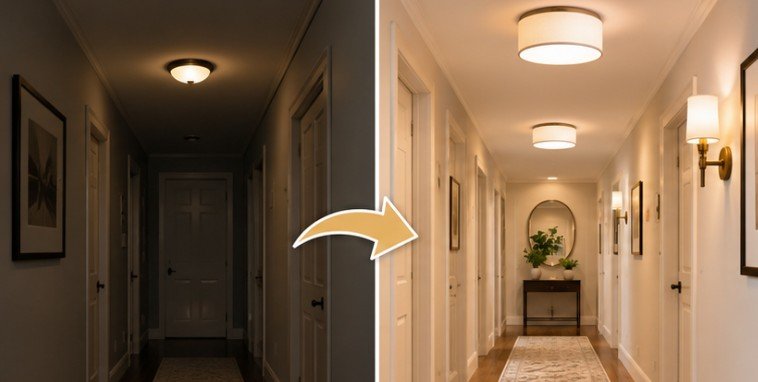
A hallway without windows can feel gloomy even when the ceiling light is switched on. Surprisingly, the problem is often not insufficient lighting but how that light spreads across the walls, ceiling, and floor.
Learning how to make dark hallway brighter without natural light starts with three improvements: distributing artificial light evenly, choosing surfaces that reflect it, and removing visual obstacles. You don’t need expensive renovations or additional windows to achieve a noticeable difference.
Whether you’re dealing with a narrow apartment corridor, an interior entryway, or a windowless hallway in an older American home, thoughtful lighting and decorating choices can make the space feel considerably more inviting.
1. Replace Weak Ceiling Lights With Better Fixtures
The most effective starting point is evaluating your existing overhead lighting. Traditional single-bulb fixtures may create concentrated pools of light rather than distributing illumination throughout a long corridor.
Consider replacing them with:
- Low-profile LED flush mounts for limited ceiling clearance.
- Adjustable track lighting for long or irregular hallways.
- Recessed downlights for a clean architectural appearance.
- Multi-bulb fixtures that provide broader illumination.
For a particularly long hallway, multiple evenly spaced fixtures generally work better than one powerful light in the center.
According to ENERGY STAR’s lighting guidance, brightness is measured in lumens rather than watts. An 800-lumen bulb offers approximately the brightness associated with a traditional 60-watt incandescent bulb.
Compare lumen ratings before purchasing replacements, and remember that fixture shades can affect how much light reaches the hallway.
2. Layer Lighting to Eliminate Dark Corners
Combine Ceiling Fixtures With Wall Lighting
A hallway becomes visually brighter when light reaches multiple surfaces instead of coming from one direction.
Wall sconces are particularly effective because they illuminate vertical surfaces, helping the entire corridor feel less enclosed.
Install slim sconces along the longest wall, or position picture lights above artwork to create additional illumination.
For narrow hallways, choose fixtures that sit close to the wall rather than projecting into walking space.
Include Low-Level Accent Lighting
LED strips beneath a floating shelf or along a baseboard can improve nighttime visibility.
Motion-activated plug-in lights are another convenient option for renters.
However, accent lighting should complement overhead illumination rather than replace it.
3. Select Warm LED Bulbs for a Comfortable Glow
Color temperature influences how welcoming a hallway feels.
The U.S. Department of Energy identifies 2700K as a warm light color commonly suited to residential spaces, while 3000K provides a slightly cleaner appearance.
For most windowless hallways, 2700K–3000K offers a practical starting range.
Avoid assuming that cooler, bluish bulbs automatically produce better illumination. Color temperature describes the appearance of light, not its brightness.
Choose bulbs with adequate lumens, good color rendering, and compatible dimming capabilities.
4. Choose Paint Colors That Work Under Artificial Light

Painting is one of the most affordable ways to transform a dark hallway. However, bright white isn’t always the best choice. In spaces illuminated only by artificial lighting, stark white can appear harsh or slightly gray.
Try Warm, Light-Reflecting Shades
Consider warm ivory, pale beige, soft greige, creamy white, or muted putty. These shades can create a softer appearance while reflecting much of the available light.
Look at the paint’s Light Reflectance Value (LRV). Higher values indicate that a surface reflects more visible light under standardized measurements. Test samples under your actual hallway lights before choosing a color.
Choose Finishes Carefully
Eggshell and satin finishes can provide subtle reflections and are generally easier to clean than flat finishes. Semi-gloss works particularly well on doors and trim but may emphasize uneven wall surfaces. Painting dark interior doors and baseboards in lighter coordinating shades can also reduce visual heaviness.
5. Position Mirrors Where They Reflect Useful Light
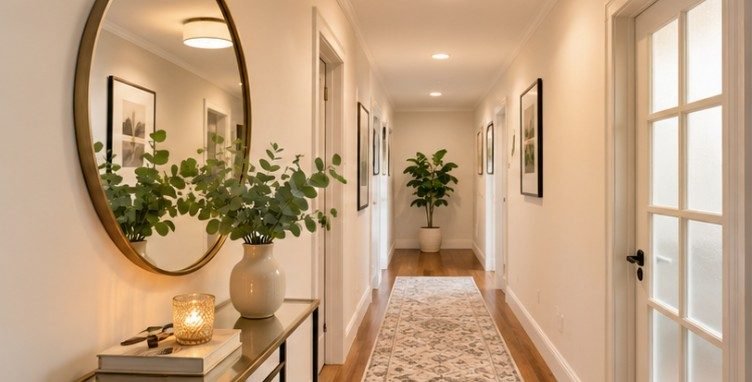
Mirrors cannot create additional light, but they can redirect illumination and make a narrow hallway appear more spacious. A large mirror opposite a wall sconce or near a ceiling fixture can reflect brighter parts of the corridor. For smaller spaces, consider a tall rectangular mirror with a slim frame.
Avoid positioning a mirror where it directly reflects an exposed bulb into someone’s eyes. That creates uncomfortable glare rather than useful brightness. Mirrored cabinet fronts and subtle metallic accessories offer additional reflective surfaces without overwhelming the design.
6. Borrow Daylight From Neighboring Rooms
A completely windowless hallway may still have access to daylight from adjoining rooms. Replacing an appropriate solid interior door with a glass-paneled design can allow daylight to travel farther into the corridor.
Frosted glass provides privacy while transmitting diffused light. Another possibility is installing an interior transom window above a doorway, where the structure and local building requirements permit.
Before changing doors or walls, check whether they have fire-rating or structural requirements. Some doors cannot safely be replaced with ordinary glass alternatives.
7. Make Flooring Part of Your Lighting Strategy
Dark flooring absorbs more light and can make narrow corridors seem visually heavier. A lighter floor finish, pale vinyl plank, or properly secured neutral runner can soften that effect. However, decorative choices must not introduce tripping hazards.
TheNational Institute on Aging’s home safety recommendations emphasize keeping hallways well-lit and free from obstacles. They also recommend avoiding loose throw rugs and ensuring carpets are securely fastened. Choose low-profile, slip-resistant flooring and avoid high-gloss surfaces that produce distracting reflections.
8. Remove Bulky Furniture and Visual Clutter
Even excellent lighting cannot compensate for an overcrowded corridor. Deep console tables, oversized coat racks, and scattered shoes interrupt sightlines and make walls feel closer together.
Replace bulky storage with shallow wall-mounted shelves, recessed storage where feasible, or hooks positioned away from the main walking route.
The 2010 ADA Standards for Accessible Design generally specify a minimum 36-inch clear width for accessible walking routes, subject to defined exceptions.
These standards do not automatically apply to every private residential hallway, but they provide a useful accessibility consideration when evaluating furniture placement.
9. Install Smart Controls for Everyday Convenience
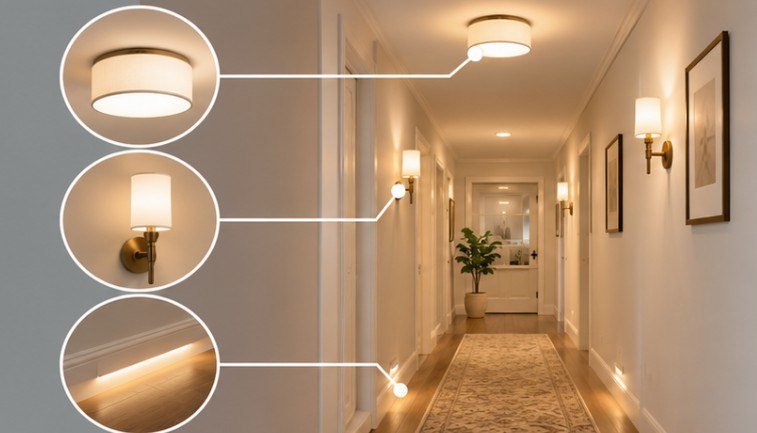
A bright hallway should also be easy to navigate at night.
Smart LED bulbs, dimmer switches, and motion sensors allow illumination to adjust to household routines.
For example, a motion-activated system can provide comfortable lighting during nighttime bathroom visits without requiring someone to search for a switch.
The Department of Energy’s residential lighting guidance discusses dimmers and occupancy sensors as practical approaches to controlling lighting use.
Check bulb and dimmer compatibility before installation, and use a qualified electrician for electrical modifications.
10. Use Decor to Create Visual Depth
Decorative details influence how people perceive narrow spaces. A series of small framed prints can guide attention along the corridor, while one larger artwork can create a focal point at the far end.
Choose lightweight frames, restrained patterns, and reflective finishes rather than oversized decorative objects.
Matching doors, trim, and surrounding walls can also reduce abrupt visual interruptions. The goal is not to eliminate personality but to create a calmer visual experience.
11. Test Your Hallway Before Spending More
If you’re deciding how to make dark hallway brighter without natural light, conduct a simple nighttime assessment before buying fixtures or repainting.
- Switch on every existing hallway light after sunset.
- Identify shadowed walls, corners, and doorways.
- Temporarily introduce a portable lamp to test whether side lighting improves the space.
- Hold paint samples against different walls under the existing bulbs.
- Check mirrors and glossy surfaces for uncomfortable glare.
- Remove unnecessary furniture and compare how open the hallway feels.
Frequently Asked Questions
1. What is the cheapest way to brighten a windowless hallway?
Replace inefficient or dim bulbs with suitable LEDs, remove bulky furniture, and use light-colored decor. Improving existing lighting is often less expensive than installing new fixtures.
2. What paint color makes a dark hallway look bigger?
Warm white, soft cream, pale greige, and light beige can make a hallway appear more open. Test samples under artificial lighting before committing.
3. Can mirrors make a hallway brighter without windows?
Yes. Mirrors reflect existing artificial light and create an impression of depth. Position them to reflect illuminated walls rather than exposed bulbs.
4. How to make dark hallway brighter without natural light in a rental?
Use plug-in LED sconces, removable lighting strips, battery-operated motion lights, and lightweight mirrors with appropriate mounting hardware. Avoid permanent electrical changes without landlord approval.
A Brighter Hallway Starts With Better Light Distribution
A windowless hallway doesn’t have to remain the darkest part of your home. The greatest improvement often comes from understanding where existing light is going rather than simply adding more of it.
Start with properly distributed ceiling lighting, then introduce wall illumination, warm paint, and carefully positioned mirrors. Keep the walking route clear and prioritize lighting that feels comfortable at different times of day.
You can make these improvements gradually, testing each change before committing to larger expenses.
Ultimately, a welcoming hallway isn’t defined by how many windows it has. It’s defined by how intelligently the available light is used.