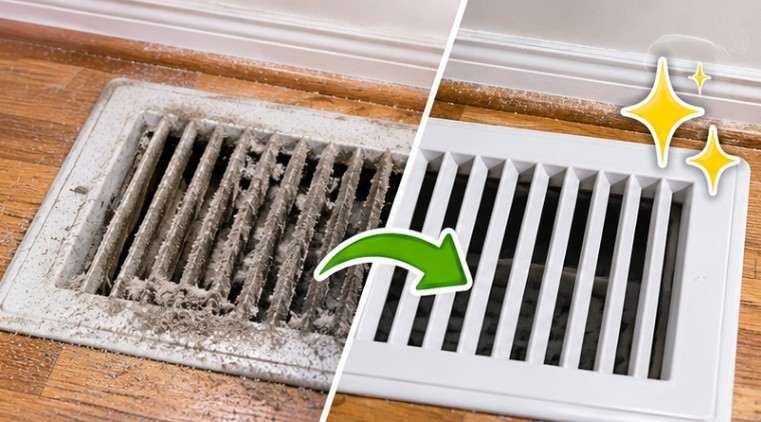
Dust collecting around your air vents doesn’t automatically mean your entire duct system needs professional cleaning. In fact, much of the visible buildup can be removed with a vacuum, microfiber cloth, and a little dish soap.
Learning how to clean air vents yourself without professional equipment can help you remove accumulated dust, pet hair, and debris from accessible openings without spending money on specialized tools.
The important distinction is knowing what you can safely clean and what should be left to an HVAC technician. With a few household supplies and the right approach, you can tackle routine vent maintenance without damaging your heating and cooling system.
Do Dirty Air Vents Really Affect Your Home?
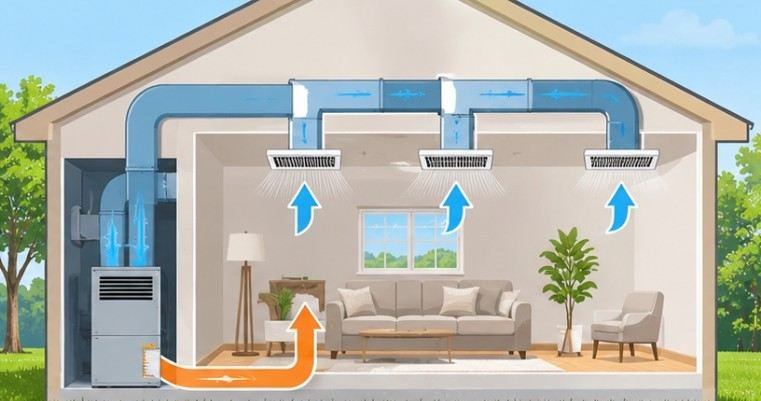
Air vents are responsible for delivering conditioned air throughout your house or returning indoor air to your heating and cooling equipment. As air moves through these openings, dust, lint, and pet hair can accumulate on the grilles and nearby surfaces.
However, visible dust doesn’t necessarily indicate serious contamination inside your ductwork.
According to the Environmental Protection Agency, research has not demonstrated that routine duct cleaning prevents health problems. The agency recommends cleaning duct systems when specific contamination problems exist rather than automatically scheduling regular deep cleaning.
This distinction matters for homeowners. Removing surface debris is practical maintenance, but cleaning an entire ventilation system is a different undertaking.
Signs Your Vents Could Use Attention
Look for these common indicators:
- Visible dust buildup around supply registers
- Pet hair trapped between grille openings
- Cobwebs inside accessible vent openings
- Dirt accumulating around return air grilles
- Small objects or debris lodged inside floor registers
A light coating of dust is generally manageable. Persistent odors, moisture, or suspected mold require further investigation.
Gather These Household Cleaning Supplies
You don’t need expensive equipment to complete basic vent maintenance.
Most homeowners can work with supplies already stored in a utility closet.
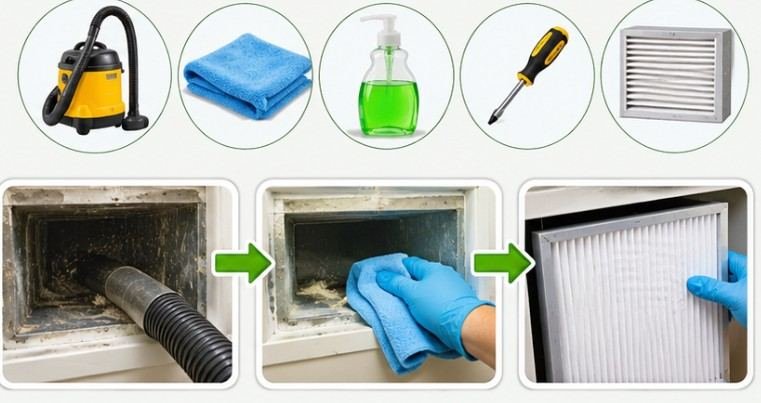
- Vacuum cleaner with a hose and crevice attachment
- Microfiber cleaning cloths
- Mild dishwashing liquid
- Warm water and a cleaning bucket
- Soft-bristled brush or old toothbrush
- Screwdriver for removing vent covers
- Flashlight for inspecting openings
- Replacement HVAC air filter, if needed
A shop vacuum can make removing larger debris easier, but a regular household vacuum with suitable attachments can handle many accessible areas.
A HEPA-filtered vacuum is preferable when fine dust is a concern. Wear gloves, and consider a well-fitting particle-filtering mask if cleaning tends to trigger respiratory irritation.
How to Clean Air Vents Yourself Without Professional Equipment: Step-by-Step
Most routine vent cleaning involves six manageable steps. Work on accessible openings only, and avoid reaching into concealed mechanical components.
Step 1: Shut Down the Heating and Cooling System
Start by switching your thermostat to the Off position.
If your system has separate fan controls, make sure the fan is also off. This prevents airflow from circulating loose dust while you’re working.
Allow moving equipment to stop before removing any covers.
Avoid opening electrical compartments, reaching into air handlers, or attempting to clean blower assemblies.
Step 2: Carefully Remove the Vent Covers
Most floor registers lift out without tools, while wall and ceiling grilles may be secured with screws.
Use an appropriate screwdriver and support overhead covers as you loosen them.
Place removed screws in a small container so they don’t disappear.
Inspect each register for rust, damaged paint, bent fins, or accumulated grease.
Painted metal covers may need gentler cleaning than unfinished metal. Wooden registers should generally be wiped rather than soaked.
Step 3: Wash Away Dust and Grease
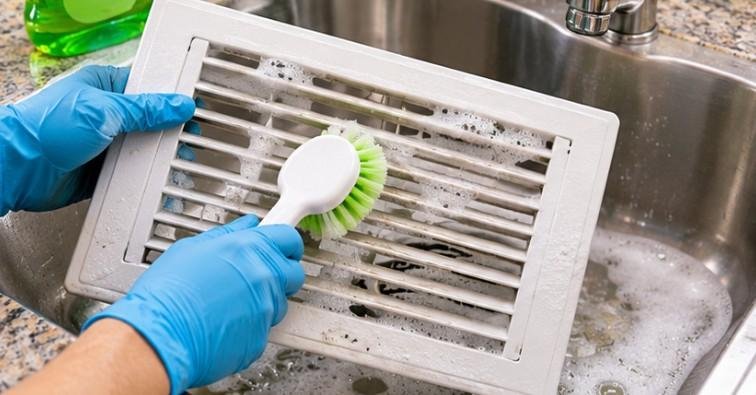
Fill a sink or bucket with warm water and a small amount of mild dish soap.
For water-safe metal or plastic covers, soak briefly to soften stubborn dirt.
Use a soft brush to clean between the slats, paying particular attention to narrow corners where dust collects.
Avoid abrasive scrubbers that could scratch protective coatings.
Rinse removable covers thoroughly and allow them to dry completely before reinstalling.
For wood, electronic grilles, or delicate finishes, follow manufacturer instructions instead of immersing them.
Step 4: Vacuum the Accessible Duct Openings
With the covers removed, shine a flashlight into each opening.
Use your vacuum’s crevice attachment to collect loose dirt from the duct boot and immediately accessible surfaces.
Work slowly rather than forcing the hose farther into the system.
Flexible ducts and insulated liners can be damaged by aggressive brushing or vacuum attachments.
If the opening has exposed fiberglass insulation, stop rather than disturbing the material.
Finish by wiping reachable metal edges with a slightly damp microfiber cloth. Avoid allowing water to enter the ductwork.
Step 5: Inspect and Replace the HVAC Filter
Air filters deserve particular attention because they help prevent airborne particles from entering HVAC equipment.
The ENERGY STAR program recommends checking filters monthly, particularly during heavy heating and cooling seasons, and replacing disposable filters when dirty or at least every three months.
Locate your filter at the designated return grille or air handler.
Keep the existing filter properly installed while cleaning vents, then replace it before restarting the system if necessary.
Match the replacement filter’s dimensions, airflow direction, and efficiency rating to your equipment’s requirements.
A higher-rated filter isn’t automatically better if it restricts airflow beyond what your system can accommodate.
Step 6: Reinstall the Covers and Check Airflow
Once everything is dry, reinstall each grille or register.
Tighten screws securely without overtightening them.
Restore the thermostat settings and allow the system to operate normally.
Listen for unusual rattling and check whether air flows from the supply registers.
A clean cover should sit securely without gaps or loose hardware.
What DIY Vent Cleaning Cannot Accomplish
Cleaning registers is different from cleaning an entire HVAC duct network.
Professional duct cleaning requires equipment designed to loosen contaminants while capturing them throughout the ventilation system.
The National Air Duct Cleaners Association explains that professional cleaning uses continuous negative pressure to collect disturbed particles and prevent their release into living areas.
Ordinary household vacuums cannot reproduce this process across long, concealed duct runs.
DIY maintenance is therefore most appropriate for visible grilles, accessible duct boots, and routine surface dust.
It should not be presented as a substitute for complete duct cleaning when serious contamination exists.
Why Spraying Fragrances Into Vents Is a Bad Idea
Some home-cleaning tutorials recommend essential oils, scented sprays, hydrogen peroxide, or homemade disinfectants to remove musty odors.
These treatments are not necessary for ordinary dust removal.
Introducing liquids into ductwork can create moisture problems, while fragrances may irritate sensitive occupants without addressing the odor’s cause.
The American Lung Association emphasizes appropriate filtration and effective air-cleaning methods for managing airborne pollutants.
For routine vent cleaning, mild soap and water on removable covers are usually sufficient.
If an odor persists after cleaning, investigate moisture, dirty HVAC components, or another indoor source rather than covering it with perfume.
Frequently Asked Questions
1. Can I clean air vents using a regular vacuum?
Yes. A household vacuum with a crevice attachment can remove loose dust and debris from vent covers and accessible duct openings. Avoid forcing attachments into concealed ducts.
2. Is it safe to wash metal air vent covers?
Usually, yes. Wash water-safe covers with mild dish soap and warm water, then dry completely. Check the manufacturer’s instructions for painted or specialty finishes.
3. Does DIY air vent cleaning improve indoor air quality?
It removes visible dust and debris, but measurable improvements in overall indoor air quality aren’t guaranteed. Effective filtration, moisture control, and source reduction remain important.
4. Can I clean air ducts without hiring professionals?
You can clean registers and reachable duct openings. Complete duct-system cleaning generally requires specialized equipment and trained technicians.
A Cleaner Home Starts With Simple Maintenance
Knowing how to clean air vents yourself without professional equipment gives you a practical way to maintain one of the most overlooked parts of your home.
You don’t need industrial machinery to remove dust from registers, wash removable covers, or vacuum accessible openings. A careful routine using basic supplies can handle these everyday tasks.
The bigger lesson is understanding the limits of DIY cleaning. A dusty grille deserves attention, but it doesn’t automatically justify expensive duct cleaning.
Start with the openings you can safely reach, maintain your HVAC filters, and investigate unusual moisture or contamination before it becomes a larger problem.