
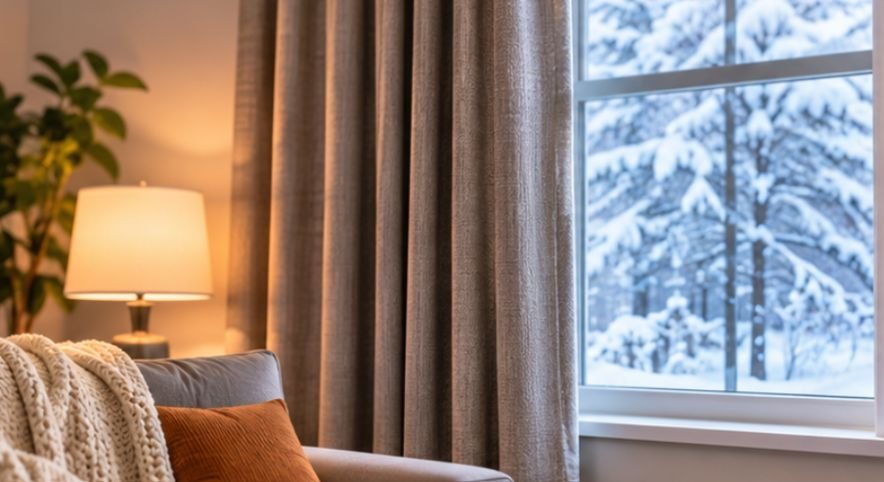
A cold window can make an otherwise heated room feel uncomfortable, even when the thermostat reads 70°F. The surprising part is that you may not need new windows to improve the situation.
So, do thermal curtains really keep a room warmer in winter? Yes, they can reduce heat loss, limit cold air circulation near windows, and make living spaces more comfortable. However, their effectiveness depends on window quality, curtain construction, and installation.
The U.S. Department of Energy estimates that approximately 30% of a home’s heating energy can be lost through windows. Insulating window treatments offer one way to reduce that loss without undertaking an expensive renovation.
Why Windows Make Heated Rooms Feel Colder
Windows are typically less insulating than surrounding exterior walls. During winter, heat moves from warmer indoor spaces toward colder outdoor conditions.
Three processes contribute to this uncomfortable cooling effect.
- Conduction: Heat travels through window glass, frames, and other materials.
- Convection: Indoor air cools against cold glass, sinks, and circulates through the room.
- Radiation: Warm objects and people exchange radiant heat with colder window surfaces.
These effects become particularly noticeable in older American homes with single-pane windows.
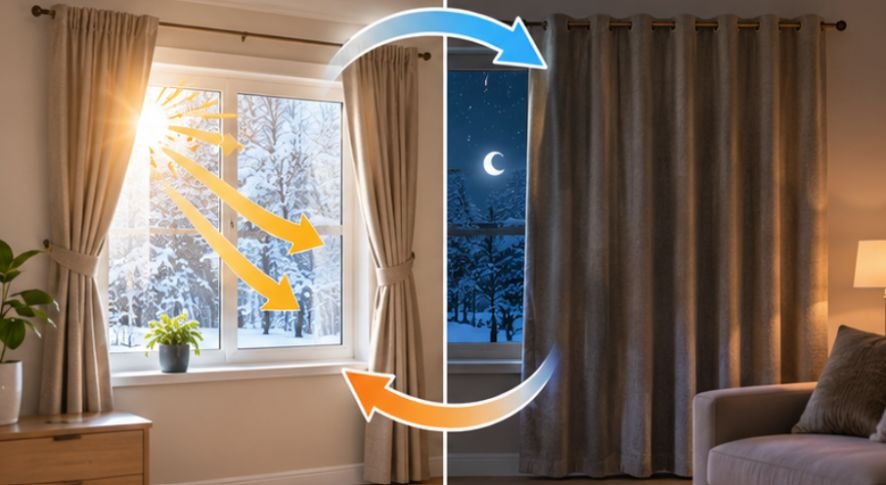
According to the U.S. Department of Energy’s winter energy-saving guidance, opening curtains during sunny hours and closing them at night can help manage indoor heat.
Thermal curtains strengthen this approach by creating an additional insulating barrier.
How Thermal Curtains Actually Retain Heat
Thermal curtains do not generate warmth. Instead, they slow the movement of existing indoor heat toward colder windows.
Multiple Layers Reduce Heat Transfer
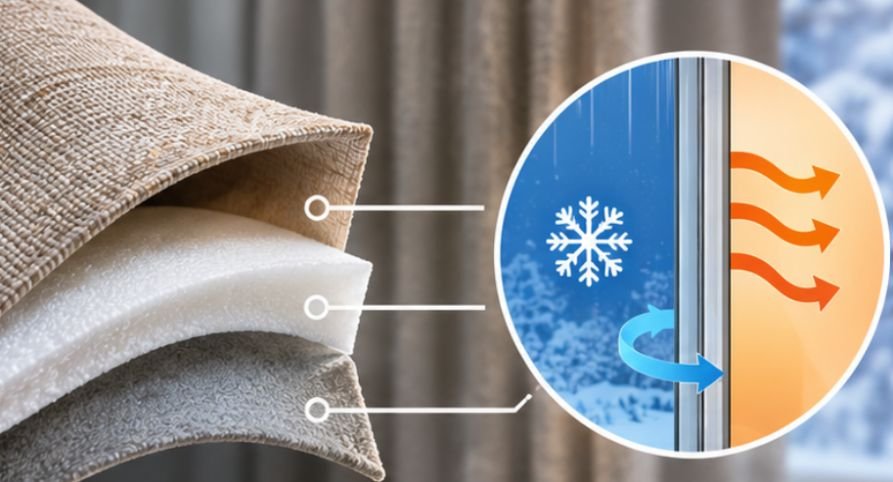
Many insulating curtains combine several materials:
- A decorative outer fabric, often polyester or cotton blends.
- A dense insulating layer made from foam, fleece, or tightly woven fabric.
- A backing designed to reduce airflow and sometimes radiant heat transfer.
Not every thermal curtain contains three layers. Some use heavy fabric and a specialized backing to achieve similar results.
The important distinction is insulation rather than thickness alone.
The Air Gap Matters More Than Most Buyers Realize
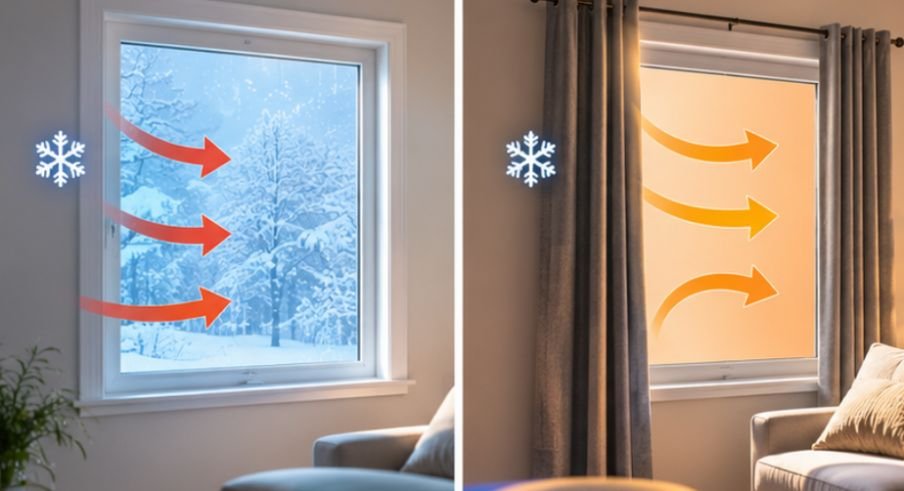
When curtains hang close to a window, they create a relatively still pocket of air between the glass and the room.
This trapped air slows convective heat movement.
However, large openings at the top, bottom, or sides allow air to circulate freely, reducing the insulating benefit.
That explains why properly fitted curtains may outperform heavier products installed with substantial gaps.
How Much Warmer Can Thermal Curtains Make a Room?
The improvement depends on your windows, climate, and heating system.
Research-based guidance supports the benefits of insulated window coverings, but a universal temperature increase cannot be promised.
Claims that thermal curtains automatically reduce window heat loss by 40% should be treated cautiously. Results depend on the complete window-and-curtain assembly, not simply the fabric.
A curtain may noticeably improve comfort near a window without producing a dramatic change in the room’s thermostat reading.
For example, a family in Minnesota with aging single-pane windows may experience a greater improvement than someone in Georgia with modern insulated glazing.
Do Thermal Curtains Lower Heating Bills?
Potentially, although savings are usually modest compared with comprehensive weatherization.
The ENERGY STAR air-sealing guidance estimates that homeowners can save an average of 15% on heating and cooling costs through appropriate air sealing and insulation improvements.
That figure does not represent curtain savings specifically.
Thermal curtains address only part of a home’s heat loss. Their financial benefit depends on how much heating energy passes through the treated windows.
Which Windows Benefit Most From Thermal Curtains?
Not every home needs the same level of insulation.
Older Single-Pane Windows
Single-pane glass provides relatively little thermal resistance.
Insulated curtains can reduce heat movement and make nearby seating areas feel more comfortable.
Homes in colder regions, including Michigan, Wisconsin, and upstate New York, may find these improvements particularly useful.
Modern Double- and Triple-Pane Windows
Modern insulated windows already resist heat transfer more effectively. Adding thermal curtains can provide supplementary insulation, but the improvement may be less noticeable.
The National Fenestration Rating Council provides independent window energy-performance ratings that help homeowners evaluate glazing efficiency.
Homeowners with high-performance windows should generally prioritize obvious drafts or poorly insulated areas before purchasing expensive curtains.
How to Install Thermal Curtains for Maximum Warmth
Even high-quality insulating curtains perform poorly when installed incorrectly.
Use this practical installation checklist.
- Measure beyond the window frame. Choose curtains wide enough to overlap both sides by several inches.
- Mount the rod above the window. Position it close enough to limit warm air escaping over the curtain.
- Choose sufficient length. Curtains should reach the windowsill or floor, depending on nearby heating equipment.
- Reduce side openings. Consider wraparound rods or side attachments where suitable.
- Close curtains after sunset. Cover windows before outdoor temperatures fall further.
- Open sunny windows during daylight. Allow useful solar warmth indoors.
For windows above radiators or baseboard heaters, curtains should not cover heating equipment or obstruct airflow.
Always follow manufacturer clearance requirements.
A Simple Home Test to Check Whether They Work
You can evaluate thermal curtains without specialized equipment.
Place one thermometer near the window and another toward the center of the room, away from direct sunlight and heating vents.
Record temperatures during several comparable evenings, first with curtains open and then closed.
Keep thermostat settings consistent and note outdoor temperatures.
A smaller temperature difference near the window may indicate improved local comfort.
This is an informal comparison rather than a controlled energy-efficiency test, but it can reveal whether the curtains are helping.
What to Look for When Buying Thermal Curtains
Marketing labels such as “thermal,” “insulated,” and “energy-saving” do not guarantee identical performance. Evaluate actual construction instead.
Look for tightly woven fabric, substantial lining, generous panel width, and manufacturer documentation describing insulation performance.
Blackout curtains are not automatically thermal curtains. Some block light effectively while providing limited insulation.
Similarly, advertised R-values require careful interpretation because curtain performance changes with installation and surrounding air gaps.
A reasonably priced, properly fitted insulated curtain may deliver better practical results than a premium product that leaves the window edges exposed.
When Thermal Curtains Are Not Enough
Curtains cannot repair damaged window seals, missing insulation, or significant structural air leakage.
If cold air enters around the sash, weatherstripping may be more effective.
For especially drafty windows, ENERGY STAR’s window insulation film instructions explain how clear interior film can reduce unwanted airflow.
Moisture also deserves attention. Heavy curtains may keep glass surfaces colder, potentially encouraging condensation.
ENERGY STAR recommends managing indoor humidity and allowing appropriate airflow around windows to reduce condensation problems.
Inspect glass and frames regularly for trapped moisture, particularly during freezing weather.
Frequently Asked Questions
1. Do thermal curtains really keep a room warmer in winter without heating?
They slow heat loss but cannot create warmth. Without heating or another heat source, indoor temperatures will eventually decline, although insulated curtains may slow that process.
2. Are thermal curtains better than regular curtains?
Usually, well-constructed thermal curtains provide greater insulation than lightweight decorative curtains. However, heavy conventional drapes with effective lining can also reduce window heat loss.
3. Should thermal curtains touch the floor?
Floor-length curtains can reduce airflow beneath windows, provided they do not obstruct radiators, heaters, or ventilation openings. Proper side coverage is equally important.
4. Can thermal curtains cause window condensation?
Yes. Insulating curtains can leave window glass colder and reduce airflow across it. Managing indoor humidity and inspecting windows regularly helps prevent persistent moisture problems.
Small Upgrade That Can Make Winter More Comfortable
Thermal curtains are not a replacement for proper insulation or energy-efficient windows, but they can make cold rooms noticeably more comfortable.
Simple home improvements can also make everyday living more comfortable for older adults, especially when supported by practical tech tips for seniors at home.
Creating a comfortable home environment involves more than managing indoor temperatures; a reliable home internet connection also supports smooth remote work, online learning, and everyday activities.
Their greatest advantage is accessibility. Homeowners and renters can install them without major renovations, making them particularly practical for older properties.
The best results come from combining well-fitted curtains with sensible heating habits, daytime sunlight, and basic draft prevention.
Before investing in expensive window replacements, examine how much cold air and heat loss you can control with simpler improvements.
Sometimes, the difference between an uncomfortable winter evening and a comfortable one is a properly covered window.