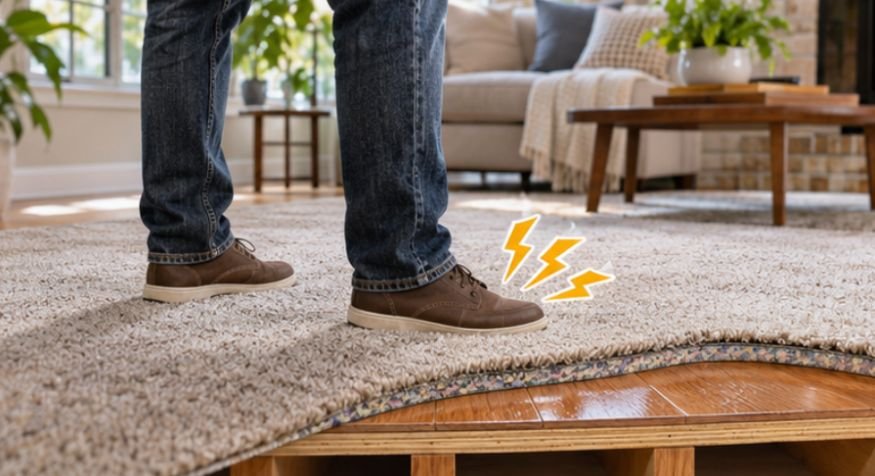
A squeaky floor does not automatically mean you need to rip out your carpet or replace expensive hardwood. In many American homes, the noise comes from a loose connection between the flooring, subfloor, and supporting joists.
Learning how to fix squeaky hardwood floors under carpet can save considerable time and unnecessary renovation costs. Specialized repair screws can secure loose flooring through existing carpeting without leaving visible damage.
However, the right repair depends on identifying what is actually moving beneath your feet. A squeak caused by loose fasteners requires a different approach from one caused by moisture damage or weakened framing.
Why Hardwood Floors Squeak Beneath Carpet
Most floor squeaks begin with movement between materials that should remain firmly connected.
As people walk across a room, loose floorboards or subfloor panels flex slightly. Wood rubs against neighboring boards, nails, or supporting joists, producing familiar creaking sounds.
Several conditions contribute to this movement:
- Loose nails: Older fasteners gradually lose their grip as floors experience repeated movement.
- Subfloor separation: Small gaps develop between the subfloor and joists.
- Seasonal humidity: Wood expands during humid periods and contracts when indoor air becomes dry.
- Installation problems: Inadequate fastening or poorly supported panel edges allow unwanted movement.
- Aging materials: Decades of foot traffic can loosen connections between flooring components.
The National Wood Flooring Association explains that changes in humidity affect wood flooring dimensions and performance. It recommends maintaining indoor humidity around 30–50% to limit moisture-related changes.
Importantly, carpet usually does not cause the squeak. It simply hides the underlying problem.
Diagnose the Noise Before Reaching for a Drill
The most important step happens before purchasing repair materials.
Walk slowly across the affected room, applying pressure to different locations. Notice whether the noise occurs at one precise spot or across a larger area.
Identify the Type of Movement
A sharp squeak appearing at one location often indicates a loose fastener or flooring connection.
Repeated creaking across several feet may suggest movement involving multiple boards or subfloor panels.
A noticeably springy floor deserves closer attention. Excessive deflection can indicate inadequate support rather than a simple loose connection.
If accessible, inspect the underside from an unfinished basement or crawl space.
The U.S. Department of Energy explains that moisture entering crawl spaces can affect floor joists and contribute to deterioration.
Check for damp wood, staining, rot, or unusual movement before attempting repairs.
How to Fix Squeaky Hardwood Floors Under Carpet Using Special Screws
For localized squeaks caused by loose flooring, a break-away screw system is often the most practical repair.
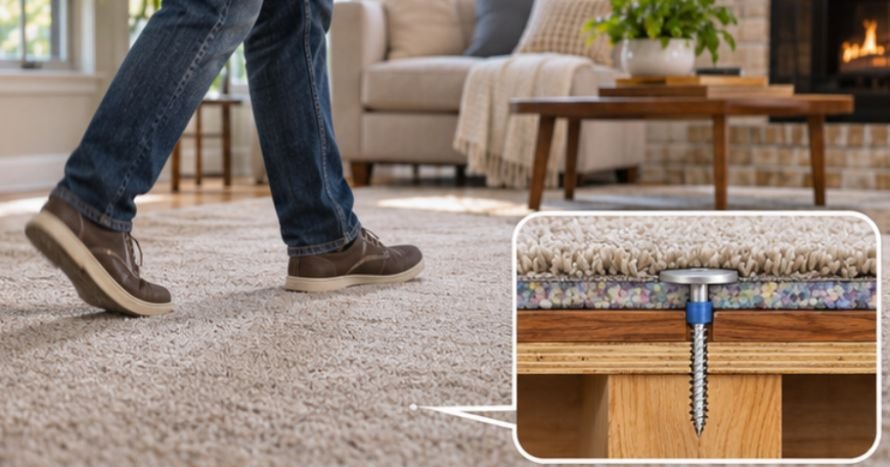
Products such as Squeek No More use specially designed screws that fasten flooring to its supports while allowing the screw heads to break away beneath the carpet.
Step 1: Gather the Necessary Equipment
Prepare the following materials:
- Carpet-compatible squeaky floor repair kit
- Cordless drill or screwdriver
- Joist-finding tool supplied with the kit
- Measuring tape
- Painter’s tape or string
- Flashlight and safety glasses
Check the manufacturer’s instructions to confirm that the system suits your flooring assembly.
Standard drywall screws are not suitable substitutes because their heads cannot be safely concealed using the same break-away process.
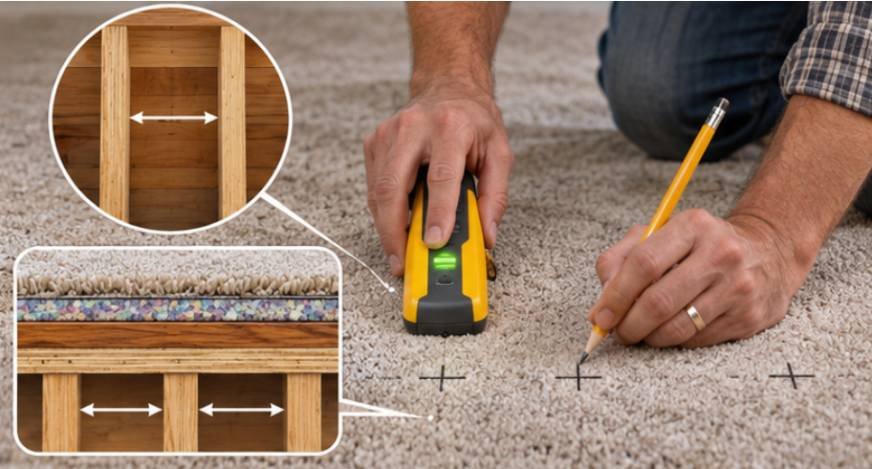
Step 2: Locate the Supporting Joists
The repair must connect the loose flooring to solid framing.
In many conventional American houses, floor joists are spaced approximately 16 inches on center, although 12-inch, 19.2-inch, and 24-inch spacing also occurs.
Use the kit’s joist-location method to identify the framing beneath the carpet.
Where available, basement access can help establish joist direction and spacing.
Mark confirmed joist locations with removable tape. Never assume that measuring 16 inches from an arbitrary point guarantees a joist.
Before drilling, identify potential plumbing, electrical wiring, and radiant heating components beneath the floor.
Step 3: Secure the Loose Flooring
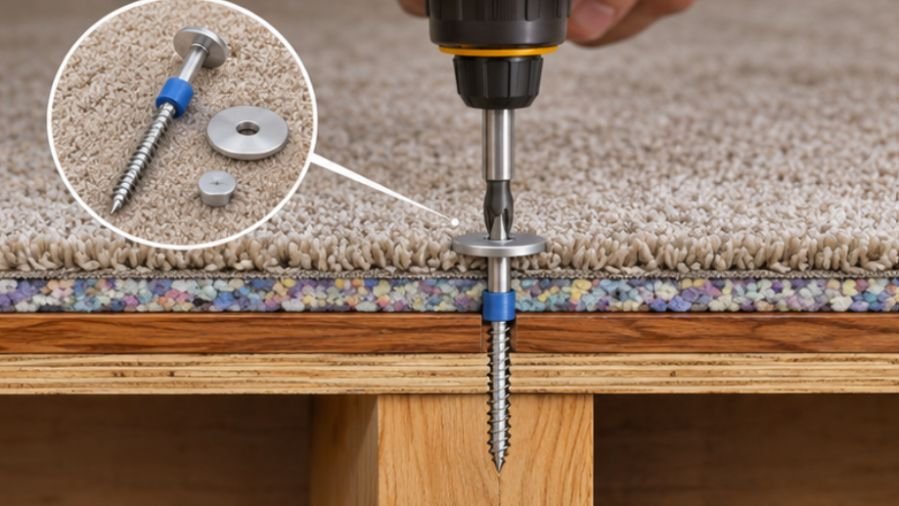
Position the repair kit’s depth-control fixture directly above the confirmed joist.
Insert the manufacturer’s scored screw into the fixture and drive it through the carpet and underlying flooring.
The screw should engage the supporting framing and pull the loose layers into a tighter connection.
Follow the specified driving depth carefully. Excessive tightening can damage wood or create unwanted pressure.
Test the repaired location by walking across it again.
If movement remains, additional screws may be necessary along the confirmed joist line, following the kit’s spacing instructions.
Step 4: Remove the Exposed Screw Head
After fastening the floor, use the supplied break-off tool to remove the scored screw head.
The remaining fastener should sit safely below the carpet surface without leaving exposed sharp metal.
Inspect the area by pressing gently with a protected hand before walking barefoot.
A correctly completed repair should leave the carpet visually unchanged.
What If the Squeak Comes From the Hardwood Instead?
Not every squeak originates where the subfloor meets a joist.
In older homes, individual hardwood boards may move against the subfloor. Tightening the subfloor to framing might not eliminate that movement.
The distinction matters because driving more screws into the wrong layer can create damage without solving the problem.
For accessible floors, repairs from underneath may offer better control.
A contractor can sometimes install appropriately sized screws through the subfloor into loose hardwood boards, taking care not to penetrate the finished surface.
Where joist-to-subfloor gaps exist, carefully fitted supports or approved construction adhesives may help.
These methods require an accurate understanding of flooring thickness and structural conditions.
Common DIY Mistakes That Make Squeaks Worse
A relatively simple repair can become expensive when homeowners rush the diagnosis.
Using ordinary screws through carpet: Exposed heads can catch carpet fibers, damage the material, or create injury hazards.
Missing the joists: Screws driven into unsupported sections may fail to secure the floor.
Overtightening fasteners: Excessive force can strip threads, crack boards, or distort flooring.
Ignoring moisture: Fasteners cannot restore wood that has deteriorated from prolonged water exposure.
The University of Minnesota Extension recommends identifying moisture sources and controlling humidity through ventilation or dehumidification when necessary.
Avoid spraying lubricants, oils, or powdered products through carpeting. Such treatments can stain materials and rarely address the underlying fastening problem.
When a Squeaky Floor Needs Professional Repair
An isolated squeak is usually a maintenance issue. However, certain warning signs justify professional evaluation.
Watch for visible sagging, widespread softness, persistent dampness, significant movement, or squeaks accompanied by cracking sounds.
These symptoms may indicate damaged subfloor panels, deteriorated joists, or inadequate structural support.
The Environmental Protection Agency warns that moisture trapped beneath carpeting can be difficult to dry and may contribute to mold or material damage.
A flooring contractor can assess loose boards, while a qualified structural professional should investigate suspected framing problems. Do not conceal ongoing water damage beneath new fasteners.
If an active plumbing leak is contributing to the moisture problem, contacting a reliable plumber in Penrith can help identify and resolve the underlying issue before further flooring damage occurs.
Preventing Floor Squeaks From Returning
Successful repairs address both loose connections and the conditions that contributed to them.
Maintain reasonably stable indoor temperatures and humidity. Repair plumbing leaks promptly and prevent water from accumulating in crawl spaces.
Keep a record of repaired locations, particularly if several rooms develop recurring noises.
If carpet replacement is already planned, use the opportunity to inspect and reinforce accessible flooring before installing new padding.
According to the EPA’s moisture-control guidance, preventing excess moisture is essential for protecting building materials.
Regular attention to these conditions can reduce future flooring movement and deterioration.
Frequently Asked Questions
1. Can you fix squeaky floors without removing carpet?
Yes. Carpet-compatible break-away screw kits can secure loose flooring through existing carpet. They work best when the squeak comes from movement at a connection that the screws can properly tighten.
2. How much does fixing squeaky hardwood floors under carpet cost?
DIY repair costs depend on the selected kit and tools already available. Professional costs vary with accessibility, floor condition, repair area, and whether structural work is required.
3. Will screws damage the carpet?
Properly installed break-away screws generally leave no visible damage. However, incorrect tools, excessive drilling, or exposed screw fragments can damage fibers or create sharp surfaces.
4. Can squeaky hardwood floors indicate structural damage?
Sometimes. An isolated squeak generally suggests movement between flooring components. Persistent sagging, significant bouncing, moisture damage, or widespread softness may indicate problems requiring professional investigation.
The Best Repair Starts With Finding the Movement
A quiet floor is not necessarily a new floor. Often, it is simply an existing floor with its loose connections properly secured.
Understanding how to fix squeaky hardwood floors under carpet begins with locating the noise, identifying the supporting structure, and selecting the least invasive repair that addresses the actual cause.
For a small, localized squeak, specialized fasteners may eliminate the problem without disturbing the carpet.
For widespread movement, water damage, or weakened framing, investigation matters more than additional screws.
The goal is not merely to silence the floor today. It is to restore a stable connection that remains reliable through years of everyday use.