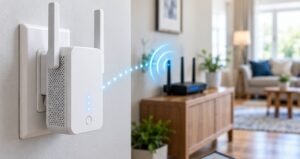

When I set up a Wi-Fi extender, I prefer seeing exactly which network it joins instead of waiting for two buttons to pair. If your router has no WPS button, or pressing it has failed, you can configure many WAVLINK extenders through a browser. Here is how to perform wavlink setup without wps, from the first connection to a working extended network.
The screens and default addresses vary by model, so keep the label and quick-start guide nearby. You will also need the name and password of the Wi-Fi network you want to extend.
Prepare the Extender and Your Device
Plug the extender into an outlet near your main router for the initial setup. Wait for it to power on fully. Starting nearby makes it easier for the extender to detect the router’s signal. Once setup works, you can move it closer to the area that needs coverage.
On a phone or computer, open the Wi-Fi list and look for the extender’s default network. On many models, its name begins with “WAVLINK,” followed by identifying characters. Check the product label or guide for the exact name and any default Wi-Fi password.
Join that network. Your device might say “Connected without internet.” That is expected during setup: you are connecting directly to the extender so you can open its settings. If you need to find a router password for a later step, check the router’s label or the Wi-Fi settings on a device already connected to it.
Open the WAVLINK Setup Page

Open a browser while your device remains connected to the extender. Type http://192.168.10.1 into the address bar and press Enter. Some models also use http://waplogin.link. These are local management addresses, so searching for them in a search engine will not open the extender’s settings.
Enter the login password shown in your device instructions. WAVLINK lists admin as the initial password for some extenders, but use the credentials for your particular model if they differ. The login password controls access to the settings page; it is separate from your main router’s Wi-Fi password.
If the page does not appear, first check that your phone or computer is still connected to the extender’s network. A device can automatically switch back to a familiar Wi-Fi connection or use mobile data when it detects no internet.
Select Repeater Mode and Connect to Your Router
In the setup wizard, choose Repeater mode if your goal is to extend your existing Wi-Fi wirelessly. Depending on the model, you may see additional choices such as Bridge or Gateway. Follow the descriptions on your device’s screen or in its manual rather than assuming every WAVLINK menu uses the same names.
Let the extender scan for nearby networks. Select your main router’s Wi-Fi name and enter its password carefully. Passwords are case-sensitive. If your router broadcasts separate 2.4 GHz and 5 GHz networks, choose a band supported by the extender and available where you plan to place it. If you also need to configure WSUS on an office network, complete the extender setup first; WSUS does not provide the router’s Wi-Fi password.
The wizard may offer a suggested name for the extended network, often based on your router’s name with an added suffix. A distinct name makes it easier to confirm which network your devices have joined. Save or apply the settings and allow the extender to restart or reconnect. Your phone or computer may disconnect from the original WAVLINK setup network when the new settings take effect.
Confirm That the Extended Network Works
Find the new extended network in your Wi-Fi list and connect using the password specified during setup. Open a website to confirm that you have internet access. Testing only whether the Wi-Fi icon appears is insufficient: a device can connect to the extender even when the extender has not connected successfully to the router.
Move the extender to an outlet between the router and the weak-coverage area, within reliable range of the router. Test again after moving it. If the connection becomes unstable, move the extender closer to the router. The python ppt library is for creating presentations, so it will not help diagnose Wi-Fi placement or signal strength.
Fix Common Setup Problems
The Login Page Will Not Open
Reconnect to the extender’s default network, then enter the local address directly in the browser’s address bar. Try http://192.168.10.1 if the local name does not resolve. If you previously configured the extender, its management address may have changed. Consult the model guide before resetting it.
The Password Is Rejected
Check whether the screen requests the extender’s management login or your router’s Wi-Fi password. They serve different purposes. If you changed the management password and forgot it, a factory reset may restore the initial login, but it also erases the extender’s configuration. Follow the reset directions for your model before setting it up again.
Wi-Fi Connects, but There Is No Internet
Reopen the Wi-Fi range extender settings and confirm that you selected the correct router network and entered its current Wi-Fi password. Then check that the router itself has internet access. During setup, keep the Wi-Fi range extender close enough to receive a dependable signal; a distant outlet can cause trouble even when the extended network remains visible.
Frequently Asked Questions
1. Can I Use a Phone for how to perform wavlink setup without wps?
Yes. Connect the phone to the extender’s default Wi-Fi network, open a browser, and use the local management address specified for your model. If the phone switches to mobile data, reconnect to the extender before continuing.
2. Do I Need Internet Access to Open the Setup Page?
No. The management page is hosted by the extender. Your phone or computer needs a connection to the extender’s Wi-Fi or, where supported, its Ethernet port.
3. Should the Extender Keep Its Default Network Name?
You can use the name offered by the wizard, but a recognizable extended-network name makes setup checks and troubleshooting easier.
A Reliable Finish
I consider setup complete only after I have joined the extended network, opened a website, and tested it from the outlet where the extender will stay. If a later connection fails, I check the router signal and saved Wi-Fi password before changing other settings. That simple order usually reveals whether the problem is placement or configuration.