
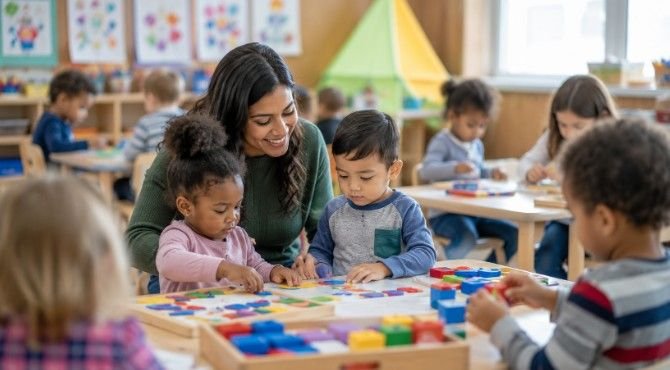
Watching young children discover new things is a reminder of how quickly learning begins. A simple conversation, a storybook, or a playful activity can influence how they think and grow.
The importance of early childhood education becomes clear when we see how these early experiences build confidence, communication skills, and a strong foundation for lifelong success. These formative years shape not only academic achievement but also emotional well-being and future opportunities.
Key Takeaways
- Quality early childhood education supports 90% of brain development before age five.
- Early learning strengthens cognitive, social, and emotional skills.
- Children gain school readiness and stronger academic outcomes.
- Long-term benefits include better health, careers, and earning potential.
- Early education helps reduce developmental and achievement gaps.
Understanding Early Childhood Education
Early childhood education creates the foundation for learning, behavior, and overall development. Early childhood education refers to structured learning experiences provided from birth through the early elementary years. During this period, children develop essential skills that influence how they learn, communicate, and interact with the world around them.
These programs go beyond teaching letters and numbers. High-quality learning environments encourage exploration, creativity, problem-solving, and social interaction. Children learn through guided play, hands-on experiences, and meaningful relationships with educators and peers.
More Than Preschool
Early education is often misunderstood as simple childcare.
In reality, effective programs are designed to support developmental milestones across cognitive, emotional, physical, and social domains. Every activity serves a purpose in helping children build critical life skills.
The Foundation Years
The earliest years are often called the foundation years for good reason. Research consistently shows that experiences during this period influence future learning capacity, early literacy development, emotional resilience, and overall well-being.
Why The Importance Of Early Childhood Education Is So Exciting
Imagine building a house. Nobody starts with the roof because everything depends on a strong base. The importance of early childhood education works the same way. It helps children build essential skills before formal schooling begins, making future learning easier, more enjoyable, and far more successful. Strong foundations today often lead to bigger opportunities tomorrow.
Brain Power Begins Early
The early years are a period of remarkable brain development. Scientists estimate that nearly 90% of brain growth occurs before a child reaches five years old. During this stage, neural connections form rapidly, creating pathways that support learning, memory, communication, and decision-making.
Positive early learning experiences strengthen these connections. Activities such as storytelling, singing, and interactive play stimulate cognitive development and encourage curiosity.
Rapid Neural Growth
Young brains develop faster than at any other stage of life. Children absorb information from their surroundings constantly. Supportive educational environments help maximize this natural learning potential.
Building Communication Skills

Language development starts long before formal reading instruction. Regular conversations, books, and classroom interactions help children expand vocabulary, improve comprehension, and strengthen communication abilities that support future academic success.
Creating Lifelong Learners
Curiosity thrives when children feel encouraged to explore. Early learning environments nurture creativity and problem-solving skills that continue to benefit children throughout their educational journey.
Ready For School And Beyond
School readiness is one of the most recognized benefits of early learning. Children who participate in quality programs often enter kindergarten with stronger literacy, numeracy, and motor skills. They are better prepared to adapt to structured classroom environments. These foundational skills help students stay engaged and perform more confidently throughout their academic careers.
Strong Academic Foundations
Early exposure to learning concepts supports long-term achievement. Children develop early math, reading, and critical thinking skills that contribute to future classroom success.
Better Educational Outcomes
Research shows positive long-term results. Students who receive quality early education are less likely to repeat grades and more likely to complete high school, develop high critical thinking skills and pursue higher education opportunities.
Learning Confidence
Confidence often grows through small accomplishments. Successfully mastering new skills encourages children to take on challenges and remain motivated learners.
Growing Social And Emotional Skills
Academic knowledge is only one piece of child development. Children also need opportunities to build emotional intelligence and healthy relationships. Early learning environments provide structured settings where these essential skills develop naturally. Positive interactions help children understand emotions, communicate effectively, and work cooperatively with others.

Learning To Work Together
Social skills develop through everyday interactions. Children learn how to share, take turns, collaborate, and resolve conflicts respectfully while engaging with peers.
Managing Emotions
Emotional regulation is a valuable life skill. Supportive classrooms help children identify feelings, express emotions appropriately, and build resilience when facing challenges.
Building Focus And Independence
Daily routines encourage responsibility. Children develop attention span, self-control, and independence that prepare them for future learning environments.
Long-Term Benefits That Last
The value of early childhood education extends far beyond the classroom. Researchers and economists continue to find strong links between early education and positive adult outcomes. These benefits affect individuals, families, and communities.
Better Career Opportunities
Early learning contributes to future success. Children who develop strong foundational skills are more likely to achieve educational goals that open doors to rewarding career opportunities.
Higher Earning Potential
Economist James Heckman’s research highlights significant returns on investment. Quality early childhood education is associated with increased earning potential and stronger workforce participation later in life.
Improved Health Outcomes
The benefits reach beyond academics. Studies connect quality early education with better physical health, improved mental well-being, and lower rates of risky behaviors during adulthood.
A Positive Impact On Society
Strong early education benefits entire communities. Investing in children during their formative years can help reduce social and economic challenges while creating more equitable opportunities for future generations.

Closing Achievement Gaps
Access to quality education supports fairness. Children from diverse backgrounds gain opportunities to build skills that help narrow educational disparities.
Lower Crime Rates
Long-term studies reveal important societal benefits. Children who participate in high-quality programs are often less likely to become involved in criminal activity later in life.
Stronger Communities
Successful learners contribute to thriving communities. Early childhood education supports workforce development, economic growth, and social stability.
Putting Learning Into Action
Families and educators can strengthen early learning through consistent support.
The importance of early childhood education becomes even more meaningful when children receive encouragement both at school and at home. Begin by creating daily reading routines and meaningful conversations. Introduce hands-on activities that encourage exploration and creativity. Support curiosity by answering questions and celebrating small achievements.
Continue by providing opportunities for social interaction and problem-solving. Encourage children to make simple decisions, complete age-appropriate tasks, and explore new experiences. These everyday actions reinforce learning and help children build confidence, independence, and resilience.
Finally, maintain strong communication between parents, caregivers, and educators. Working together ensures children receive consistent support that promotes healthy development and long-term success.
Frequently Asked Questions
1. What is the main purpose of early childhood education?
The main purpose of importance of early childhood education programs is to support cognitive, social, emotional, and physical development while preparing children for successful lifelong learning experiences.
2. What is the most important thing in early childhood education?
The most important element is providing a safe, nurturing, and stimulating environment where children can develop confidence, curiosity, communication skills, and positive learning habits.
3. What are the 5 importance of learning in education?
Learning helps children develop knowledge, critical thinking abilities, communication skills, problem-solving capabilities, and personal growth that support success throughout life.
4. What are four reasons why it’s important to study childhood development?
Studying childhood development helps understand learning patterns, improve teaching methods, identify developmental challenges early, and support healthy cognitive and emotional growth.
Tiny Learners, Huge Futures
The importance of early childhood education cannot be overstated. These early years shape brain development, emotional intelligence, academic readiness, and future life outcomes. Quality early learning experiences give children the skills, confidence, and support they need to thrive in school and beyond.
By investing in strong educational foundations today, families and communities help create brighter opportunities for tomorrow’s leaders, innovators, and lifelong learners.