

Here is the part many new entrepreneurs get wrong: moving $5,000 from a business checking account into a personal account does not automatically mean you earned $5,000 of taxable business income.
For many self-employed owners, taxes are based primarily on business profit, not simply on how much cash they withdraw. That distinction is central to understanding how to pay yourself as a business owner without creating bookkeeping problems, unexpected tax bills, or a cash shortage three weeks later. The right payment method depends first on your tax structure. The right amount depends on something different: what the business can consistently afford.
Your Business Structure Decides How You Get Paid
Business owners cannot simply choose whichever payment method produces the smallest tax bill. Federal tax treatment depends heavily on how the company is organized and taxed.
The IRS specifically notes that compensation procedures for paying yourself vary according to business structure.
Sole Proprietors and Single-Member LLC Owners
A sole proprietor normally pays themselves through an owner’s draw.
That might be an electronic transfer from the business account to a personal account. It is not normally treated like employee payroll, and the owner does not deduct the draw as a business wage expense.
More importantly, withdrawing less money does not necessarily reduce taxable profit. The IRS requires sole proprietors to report business income and expenses through Schedule C, with self-employment tax generally calculated through Schedule SE when applicable.
Suppose your business earns $90,000 after deductible expenses but you withdraw only $50,000 for personal use. Your tax calculation generally begins with the business’s earnings rather than assuming only the $50,000 withdrawal is taxable.
That is one reason keeping money in the business does not automatically eliminate the owner’s personal tax obligation.
Partnerships and Multi-Member LLCs
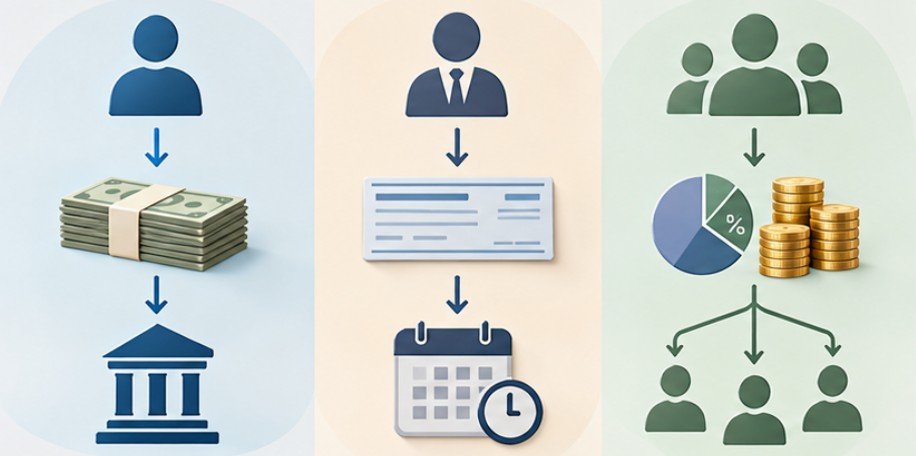
Partners operate under different rules.
The IRS states that partners generally are self-employed rather than employees of their partnership. They should not simply replace partnership distributions with a W-2 paycheck.
Partners may receive distributions representing their share of the business and, in some arrangements, guaranteed payments.
A guaranteed payment is particularly useful when a partner needs predictable compensation. It can be established without depending on the partnership producing a particular amount of profit.
Partners should also pay close attention to Schedule K-1. A partner can potentially owe tax on allocated partnership income even when the business has not distributed the same amount of cash.
That possibility makes tax planning especially important for businesses with multiple owners.
S Corporations Require More Discipline
S corporations create one of the most misunderstood situations in owner compensation.
A shareholder who materially works in the corporation generally cannot simply label everything a distribution to avoid payroll taxes. The IRS says S corporations must pay shareholder-employees reasonable compensation for services before making non-wage distributions attributable to those services.
That usually means running a legitimate W-2 salary through payroll. Additional qualifying profits may then be distributed to shareholders.
But what counts as “reasonable”?
There is no universal percentage.
The IRS considers facts such as responsibilities, experience, time spent working, comparable compensation, and how the business generates revenue. One useful benchmark is the Bureau of Labor Statistics’ Occupational Employment and Wage Statistics database, which currently provides wage estimates for roughly 830 occupations and allows comparisons by location and industry.
If you run a marketing agency, for example, comparing your responsibilities with salaries for marketing managers, sales managers, and general operations managers can provide evidence for a defensible compensation range.
The underlying federal regulations also recognize comparable market compensation as an important consideration in determining reasonable value for services. Read at Cornell Legal Information Institute on S corporation rules.
C Corporation Owners Usually Use Payroll
An owner working as an officer of a C corporation will commonly receive W-2 wages through payroll.
That means withholding federal income taxes and applicable Social Security and Medicare taxes just as the company would for another employee.
Profitable corporations may also distribute dividends. Those payments are different from wages and can create separate shareholder-level tax consequences, so they should not be treated casually as substitutes for payroll.
How Much Should You Actually Pay Yourself?
Knowing the legal payment method solves only half the problem.
You still need to know what the business can afford.
A useful owner-pay calculation starts with cash rather than revenue:
1. Calculate Normal Monthly Operating Costs

Include payroll, rent, software, inventory, utilities, loan payments, insurance, marketing, contractor costs and recurring professional fees.
If regular business expenses total $18,000 each month, that number becomes your operating baseline.
If you are still estimating expenses before launching, work through your small-business startup costs before deciding what compensation the company can support.
2. Protect a Cash Reserve
Do not distribute every dollar left after paying this month’s bills.
Cash can disappear quickly when a large customer pays late, equipment fails, sales fall seasonally or an insurance bill arrives.
For example, imagine a company has:
$60,000 cash available
– $22,000 upcoming operating expenses
– $15,000 chosen operating reserve
– $8,000 earmarked for taxes and obligations
= $15,000 potentially available
That does not mean the owner should automatically withdraw the entire $15,000. It means compensation can be evaluated without consuming money already committed elsewhere.
The same cash discipline can strengthen the company if you later need to prepare your small business for funding.
Create an Owner Payday Instead of Taking Random Withdrawals
One of the easiest improvements is surprisingly simple: establish a schedule.
Pay yourself weekly, twice monthly or monthly instead of transferring money whenever your personal checking account gets low.
SCORE’s small-business education materials similarly emphasize creating a sustainable owner compensation the business can realistically sustain rather than treating owner pay as whatever happens to remain.
Regular payments make household budgeting easier and expose cash-flow problems earlier.
Setting clear financial priorities also becomes easier when you learn how to set business goals for the first year, particularly when balancing owner compensation with operating expenses, cash reserves, and long-term business growth.
You might set a conservative baseline payment and review it quarterly. If trailing profits and cash reserves strengthen, increase compensation or take an additional permitted distribution.
Keep Business and Personal Money Separate

Regardless of entity type, do not run everyday personal expenses directly through the company account simply because you own the business.
The Small Business Administration recommends maintaining separate business banking because it improves recordkeeping while helping preserve separating business and personal finances.
Instead, document the owner payment properly, transfer it to your personal account and pay household expenses from there. That creates a much cleaner audit trail.
Do Not Guess at Your Tax Reserve
Advice telling every entrepreneur to “save 30% for taxes” sounds convenient, but it can be wrong in either direction.
Your actual obligation can depend on taxable income, filing status, state taxes, other household income, deductions, credits and business structure.
Self-employed individuals who do not have enough tax withheld may need estimated payments during the year. The IRS notes that the federal system operates on a pay-as-you-go basis, which is why quarterly estimated payments often matter for owners receiving income without payroll withholding.
A CPA or enrolled agent can help establish a tax reserve based on projected annual results rather than a generic percentage.
Frequently Asked Questions
1. Can I pay myself whenever I want as a business owner?
It depends on your entity. Sole proprietors have considerable draw flexibility, while corporations have stricter payroll and compensation requirements. Cash availability should also influence timing.
2. How much should I pay myself from my business?
Start with sustainable cash flow. Cover operating costs, taxes and an appropriate reserve before determining recurring personal compensation.
3. Do I pay taxes on an owner’s draw?
The draw itself generally does not determine a sole proprietor’s taxable income. Taxes are generally calculated from business net earnings rather than simply the cash withdrawn.
4. What is the best way to learn how to pay yourself as a business owner?
First identify your federal tax classification. Then choose the permitted compensation method, calculate sustainable cash flow, establish tax reserves and document every payment correctly.
Build a Paycheck the Business Can Keep Supporting
Learning how to pay yourself as a business owner is less about choosing the largest withdrawal you can make this month and more about building a system that can survive the next twelve.
Start with your entity type, separate business cash from personal spending, protect money already needed for taxes and operations, and create a repeatable pay schedule. If you operate an S corporation or partnership, have a qualified tax professional review the arrangement before assuming a draw, distribution or salary is being handled correctly.
The goal is not simply to get money out of your company. It is to pay yourself without weakening the company that has to produce your next paycheck.