
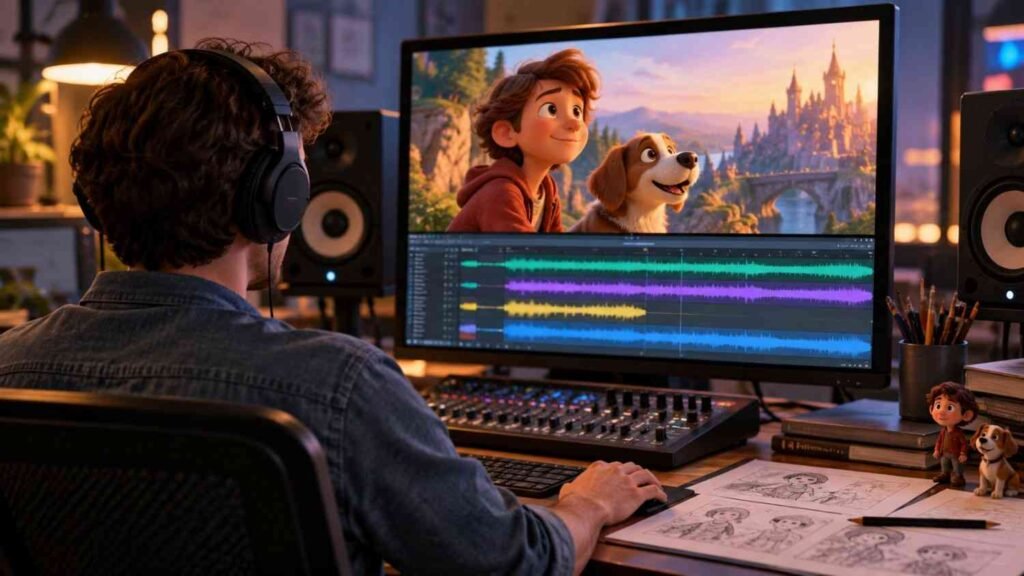
I have noticed that I can watch an animated scene with impressive visuals and still feel that something is missing when the sound is weak. A background may look beautifully detailed, and the lighting may be dramatic, yet the scene can feel strangely flat. The moment footsteps, breathing, dialogue, music, or a timed effect enters, the same sequence suddenly feels alive.
I also started paying attention to how often sound tells me what to notice before I consciously process the image. A rising musical phrase can make a simple doorway feel threatening, while a tiny environmental sound can make a fictional setting seem lived in. That made me realize that audio is not merely something added after animation is finished. It helps shape how the finished film is experienced from beginning to end.
1. Audio Establishes the Emotional Core
Animation can create extraordinary faces and gestures, but visuals alone do not always communicate the full emotional weight of a moment. Voice performance adds personality through tone, pacing, hesitation, breath, volume, and tiny changes in delivery. A character whispering after a frightening event can reveal more than a dramatic expression ever could.
Music works alongside that performance. A restrained score can make a quiet goodbye feel intimate, while a faster rhythm can turn ordinary movement into anticipation. The same image can create very different reactions when its musical context changes.
That is why emotional sound design needs judgment rather than volume. Strong audio does not mean filling every second with music or effects. Silence can create tension, give dialogue room to land, or make the return of music feel more powerful. When these elements work together, audiences do not simply understand what a character is feeling. They experience the scene through a carefully shaped emotional rhythm.
2. Audio Sells the Illusion of Reality
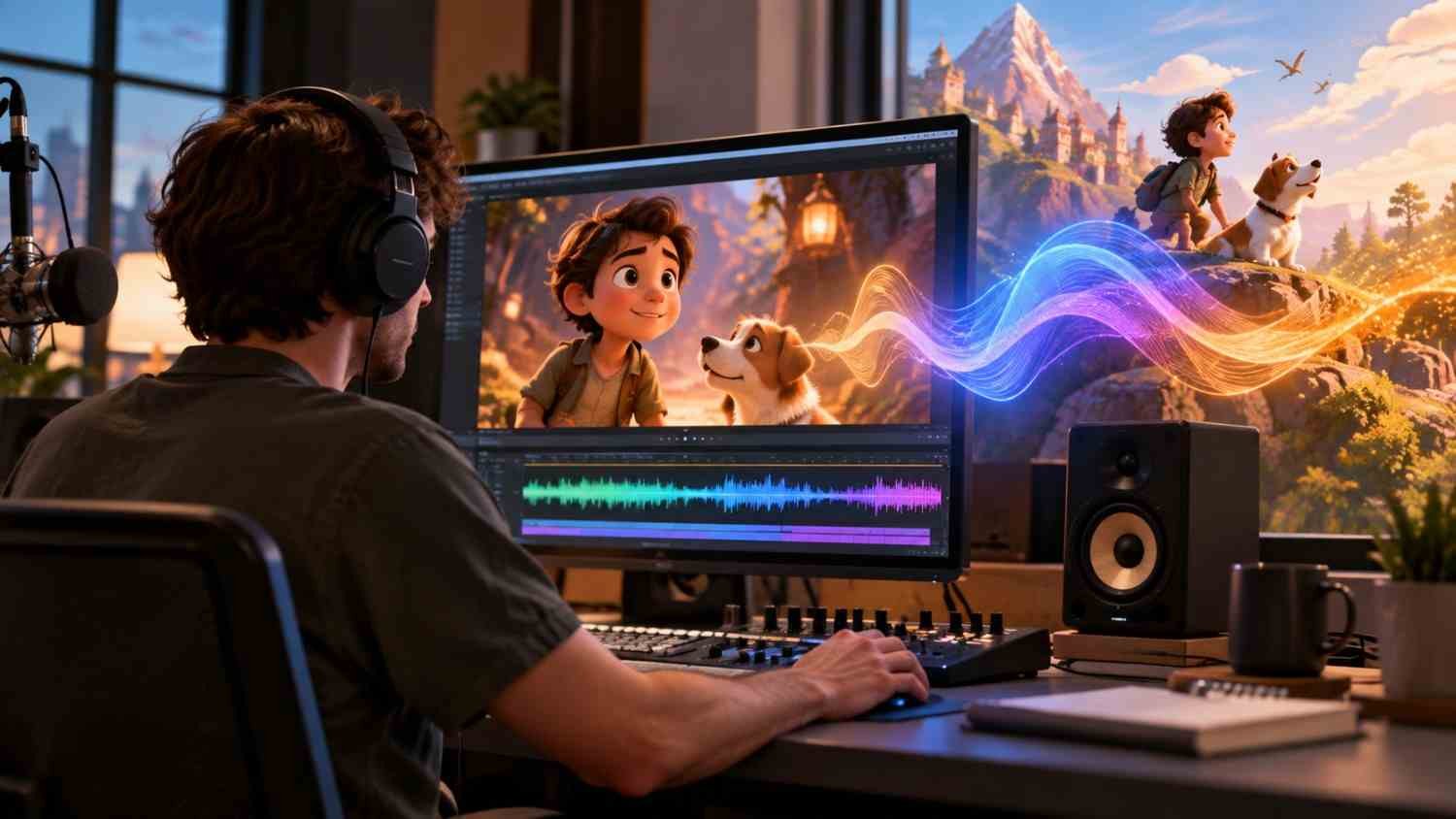
An animated world does not arrive with naturally recorded production sound. Artists and sound teams have to construct its sonic identity. Footsteps, clothing movement, doors, impacts, weather, machinery, animal noises, and countless smaller details must be designed, recorded, edited, or sourced and then synchronized with the picture.
Foley is particularly valuable because it gives movement a sense of physical consequence. A character walking across wood should sound different from one crossing snow or metal. A heavy object needs an appropriately weighty impact. Together they persuade the audience that the world has texture and physical rules.
This is especially important in fantasy and science-fiction animation. Dragons, robots, imaginary vehicles, and impossible landscapes do not have real-world sounds waiting to be recorded. Sound designers therefore build convincing sonic identities that complement the visuals. The result can make something completely fictional feel tangible.
3. Audio Drives Timing and the Animation Workflow
Sound can influence animation before the final images even exist. Dialogue is often recorded early enough to give animators a performance to work from, particularly in character-driven productions. The recorded delivery provides timing for mouth movements, pauses, reactions, gestures, and changes in expression.
Animators need to account for individual sounds, syllables, emphasis, timing, and the actor’s performance when creating lip synchronization. A pause may create space for a glance, while a sudden change in vocal energy can prompt a different facial expression or body movement.
Music and effects can influence timing too. Editors may adjust the length of a shot so an action lands with a musical beat or a sound effect. In this sense, audio and animation are partners throughout production, not separate layers that meet only at the end.
4. Audio Anchors Spatial Awareness
A screen shows only what fits inside its frame, but sound can suggest a much larger environment. A distant siren, footsteps approaching from another room, birds outside a window, or machinery operating somewhere beyond the camera can make a setting feel bigger than the image itself.
Directional and off-screen sounds also help guide attention. If something crashes outside the frame, the audience immediately understands that the event matters even before seeing it. A sound arriving from a particular side can establish movement or location and encourage viewers to anticipate where the next visual action will appear.
Ambience establishes whether a place feels crowded, isolated, enclosed, open, calm, or dangerous. Those layers influence how the scene is understood.
5. Audio Can Bridge Visual Limitations
Animation demands enormous amounts of creative labor. Every movement, expression, background detail, and environmental change has to be planned and produced. Sound cannot replace necessary animation, but it can strengthen an action without requiring every physical detail to be shown.
A deep impact, a sudden burst of debris sounds, or a carefully timed low-frequency effect can make an object feel massive. A sharp whoosh can sell speed. A crowd heard beyond the frame can suggest a much larger event than the image needs to display.
This is where imaginative sound design becomes particularly useful. Rather than compensating for poor visuals, it adds information that visuals alone would struggle to communicate efficiently.
FAQs: 5 Reasons Why Audio Acts as the Backbone of Any Animation Film
1. Why is audio important in animation?
Audio creates emotion, physicality, atmosphere, character personality, and narrative context. It helps viewers understand and feel scenes beyond what the visuals communicate.
2. What is Foley in animation?
Foley is the creation or recording of everyday movement sounds, such as footsteps, clothing, impacts, and object handling, which are synchronized with animated action.
3. Does audio affect animation timing?
Yes. Dialogue, music, and sound effects can influence lip-sync, gestures, editing, shot duration, and the timing of important visual actions.
4. Can sound make animation feel more realistic?
Yes. Detailed environmental sounds, spatial cues, Foley, and carefully balanced effects can make fictional settings feel more physical and believable.
Why the Sound Stays With the Story
The strongest animated films rarely treat sound as decoration. Audio gives characters recognizable personalities, gives movement weight, establishes places beyond the frame, shapes emotional pacing, and quietly fills in details the eye cannot provide. Its influence can begin during early production and continue through editing, sound design, music, and final mixing. When those pieces are balanced thoughtfully, the audience stops separating picture from sound and experiences one complete world.
That is the real strength of animation audio: it makes what we see feel like something we can hear, sense, and believe.